



BIENNALE ARTE 2026 · SAN CLEMENTE PALACE · CURATED BY STÉPHANE RUFFIER – MERAY
AN IN-DEPTH FEATURE BY ANIMICA PORTRAITS
Some works are not to be looked at. They are to be walked through.
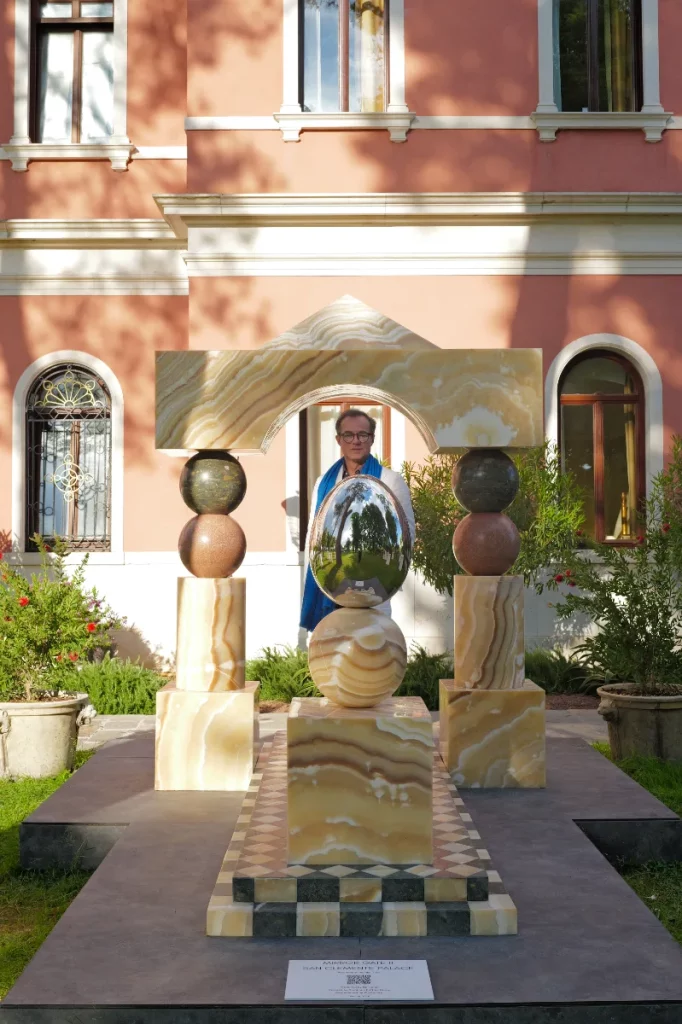
Mirror Gate II is one of them.
There is something improbable — and for that very reason, perfect — in the juxtaposition of millennia-old Egyptian stone and the historic gardens of San Clemente Palace in Venice. And yet that is precisely where Mirror Gate II by Pilar Zeta has chosen to stand — as though the place had called it there.
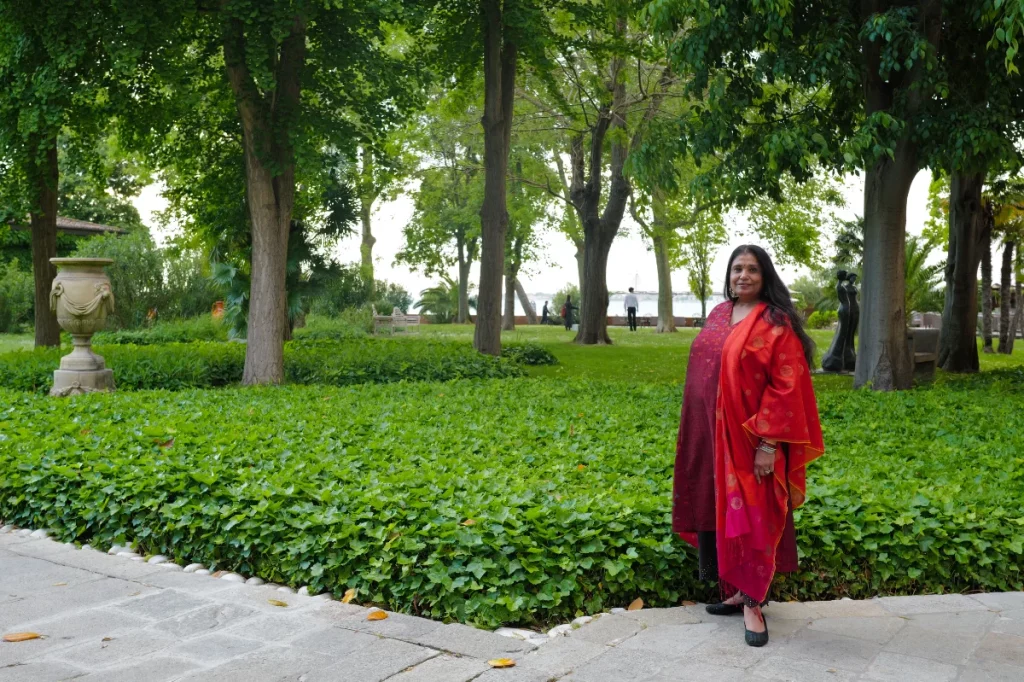
The work is installed in the gardens of the private island of San Clemente for the Biennale Arte 2026: eighty thousand square metres of historic greenery, ten minutes by boat from Piazza San Marco, hosting for this edition one of the most evocative sculptural interventions in the lagoon.
Pilar Zeta is Argentine, multidisciplinary, and works in a territory that defies easy definition: sculpture, architecture, design, sacred symbolism. Her work explores archaic geometries and proportions that echo the most ancient traditions — Egyptian, pre-Columbian, medieval — and brings them into contemporary spaces with an almost mathematical precision.
Mirror Gate is not a new work. It is a project that has travelled the world before reaching Venice: it entered into dialogue with the Pyramids of Giza, then made its European debut in the courtyard of the Louvre in Paris in January 2026.
Each location has added another layer of meaning. Venice — a city that is itself a threshold, suspended between water and land, between East and West — is perhaps the most natural home of all.
Mirror Gate II comprises three marble sculptural elements produced by Marmonil, a company specialising in the extraction and crafting of exceptional stones, with deep expertise in heritage Egyptian stone:
The materials are not chosen at random. Pilar Zeta works with stones that carry history, specific gravity, cultural resonance. Yellow alabaster, red Aswan granite, Breccia Fawakhir — these are materials that built temples, that delimited sacred spaces for thousands of years. Placing them in the Venetian gardens means opening a rift in time as much as in space.
The work can be traversed with the eyes, with the body, with thought. Every angle of vision shifts perception: the Venetian light — which is never the same at any two hours of the day — enters between the stones and continuously transforms them.
The project is curated by Stéphane Ruffier-Meray, gallerist and curator with a long history in the dialogue between the French art world and Venice. It is he who built the critical and relational framework that brought Mirror Gate II into the gardens of San Clemente Palace — choosing a private venue of the highest calibre over the more obvious institutional spaces, with a precise intention: that the work should speak in a gathered, unhurried environment.
Ruffier-Meray is also the curator who accompanied Pilar Zeta on her journey from the Louvre to Venice, ensuring narrative continuity across the project’s various international stages.
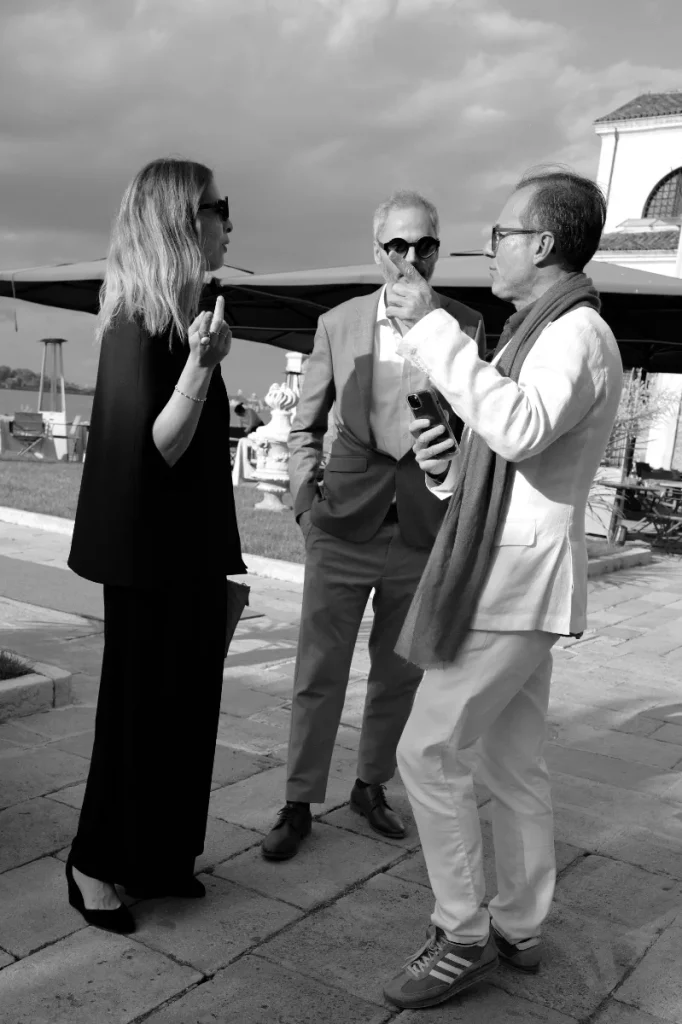
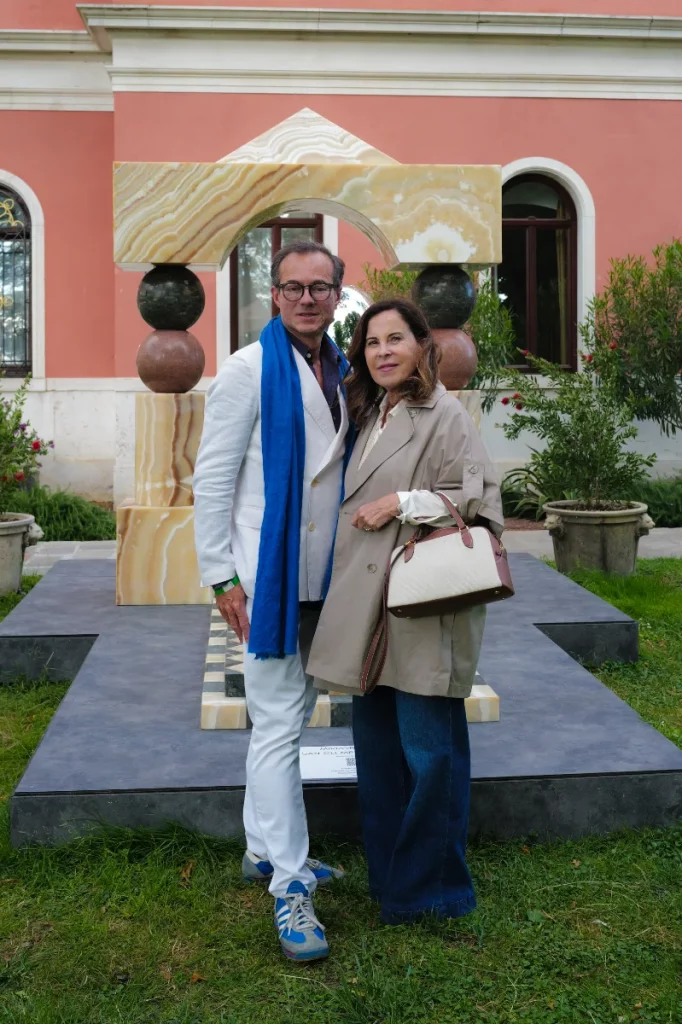
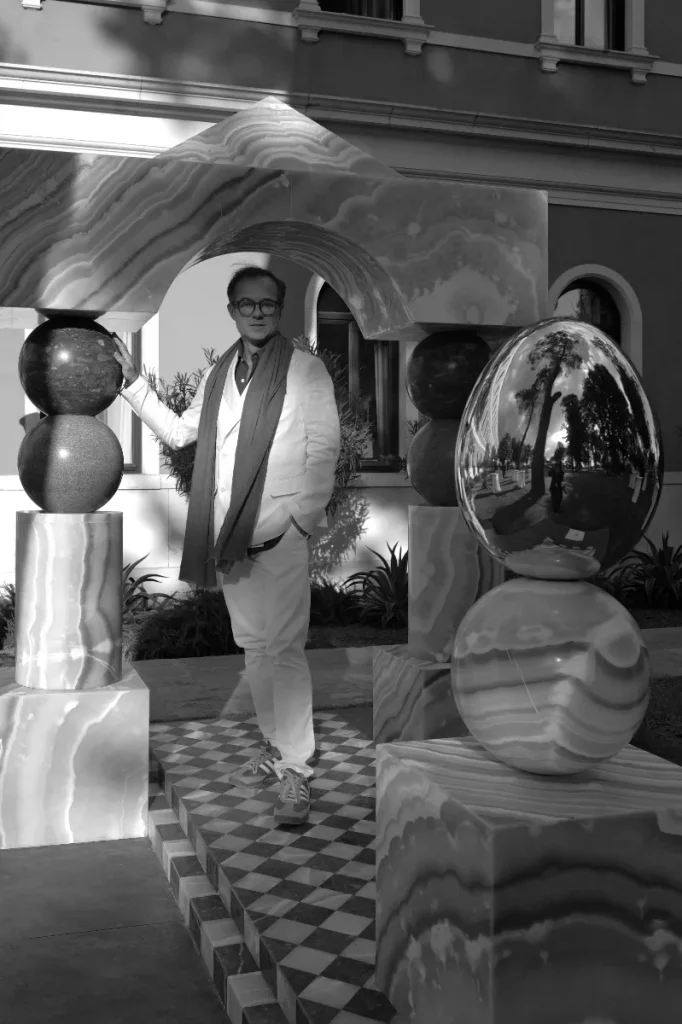
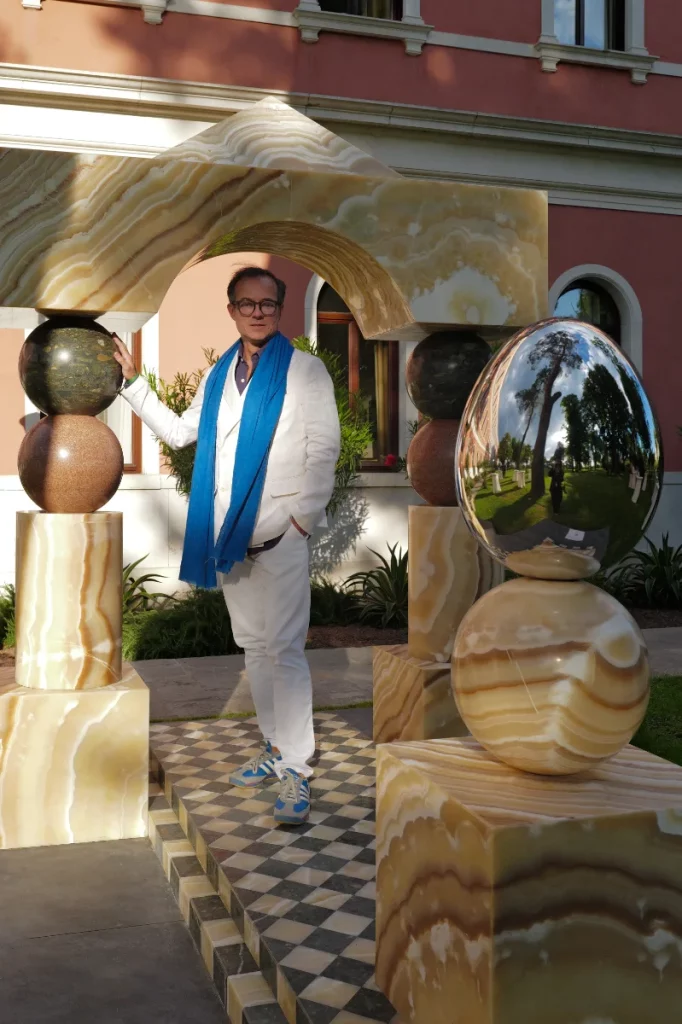
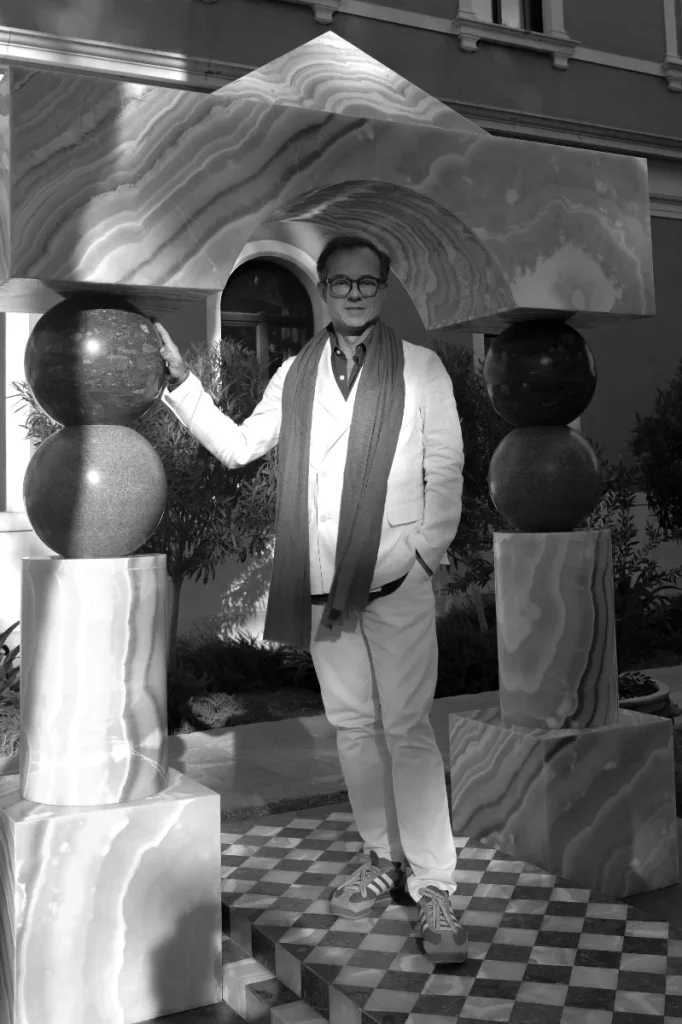
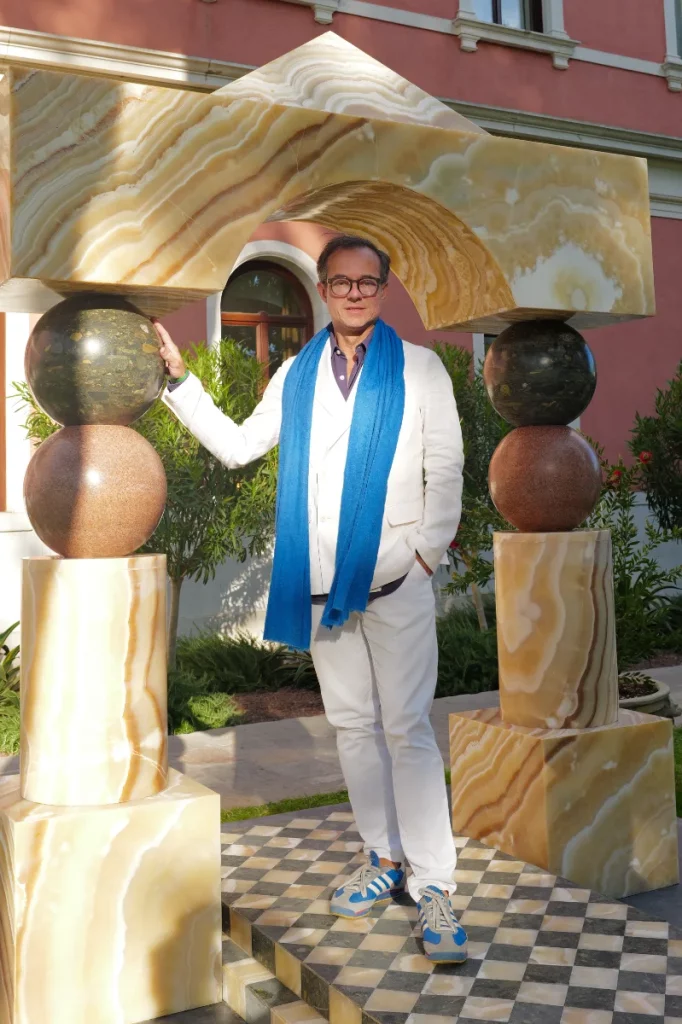

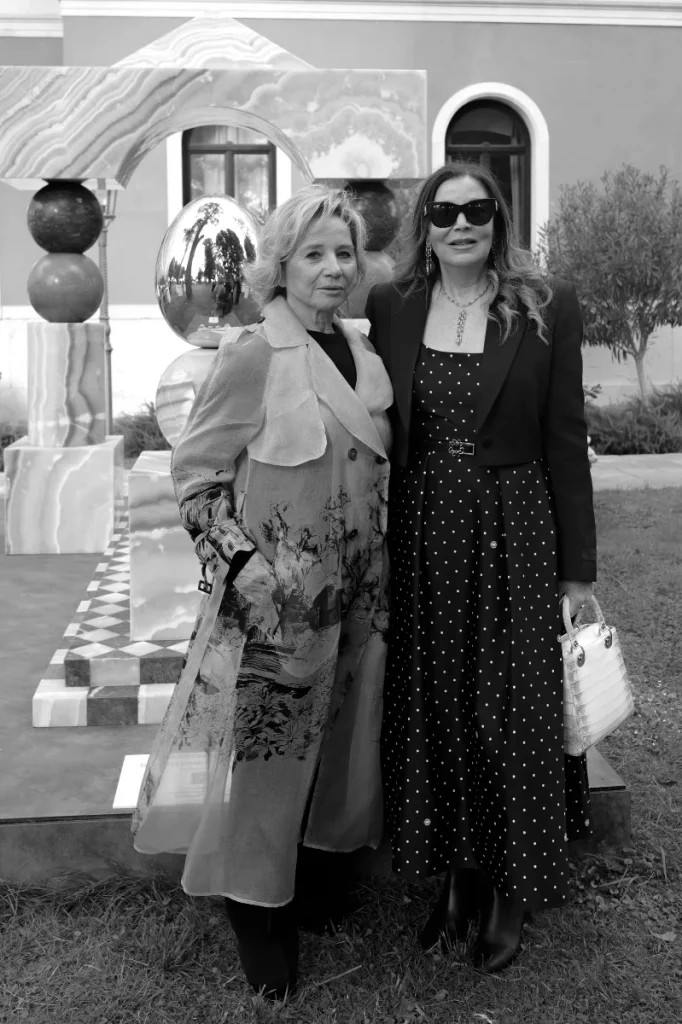
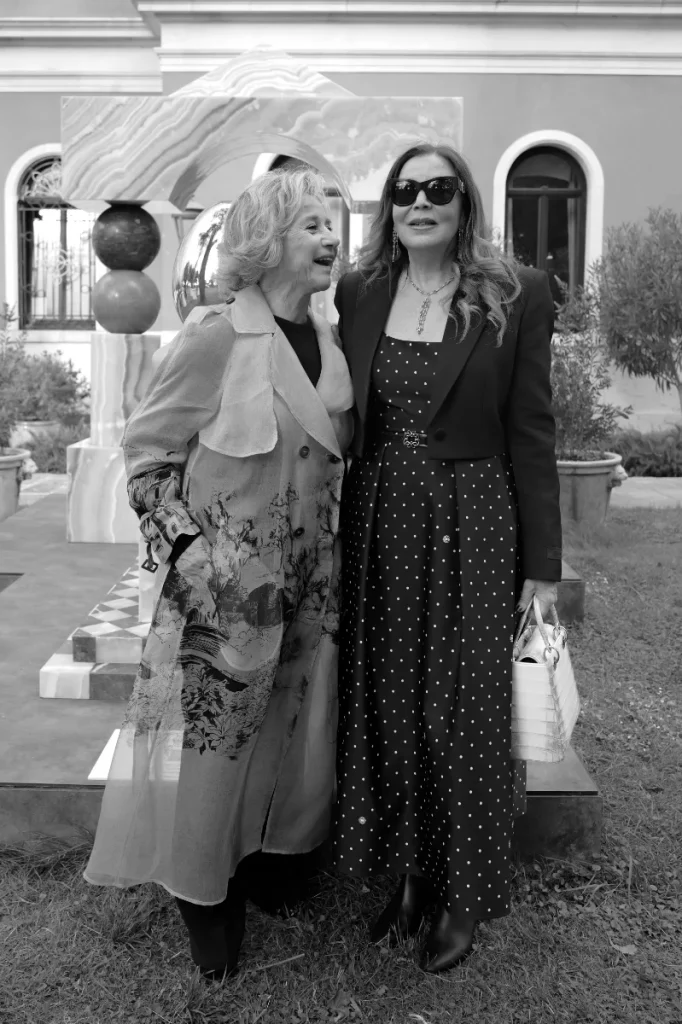
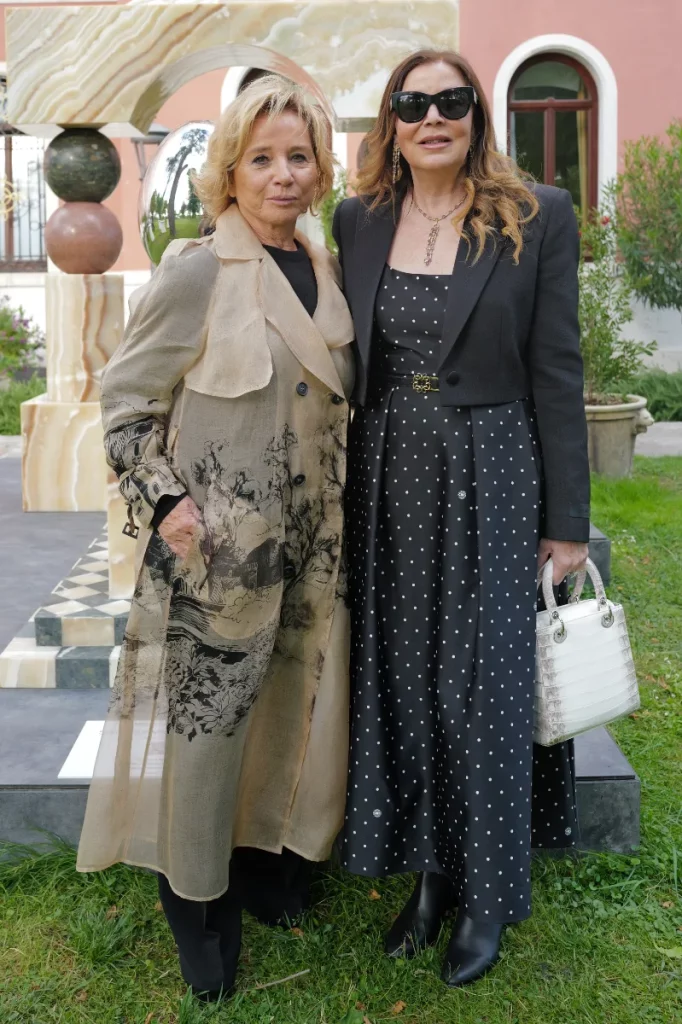
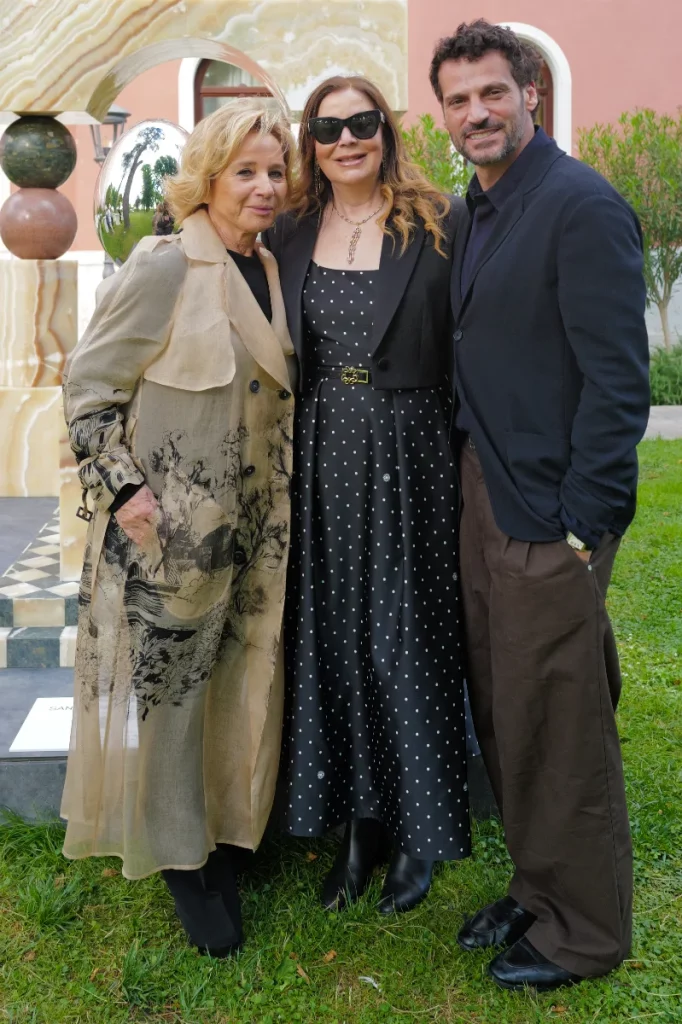
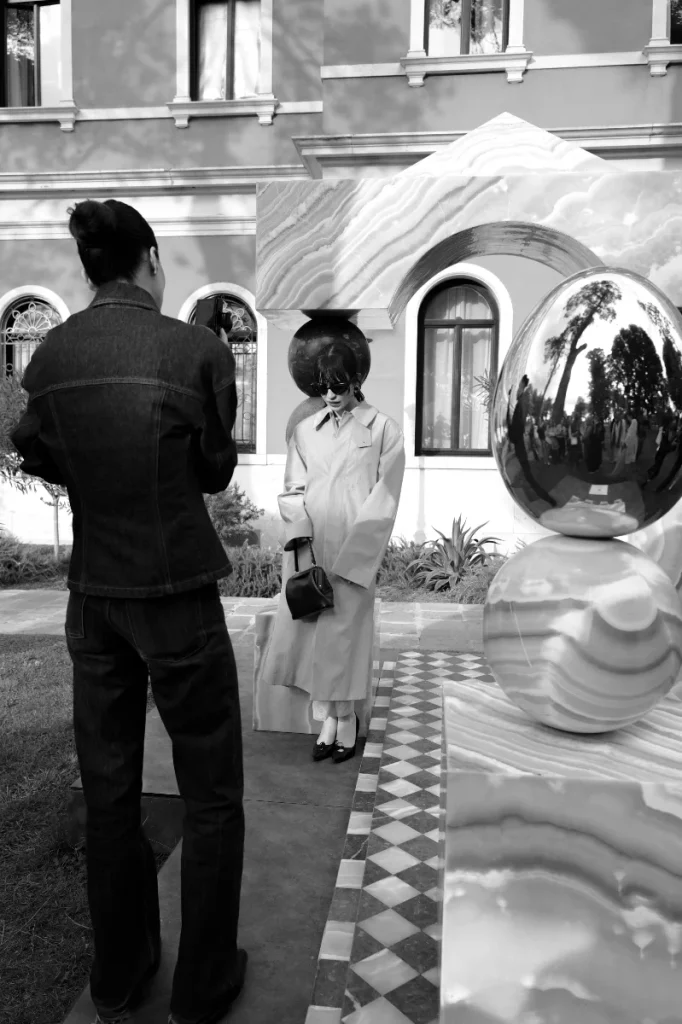
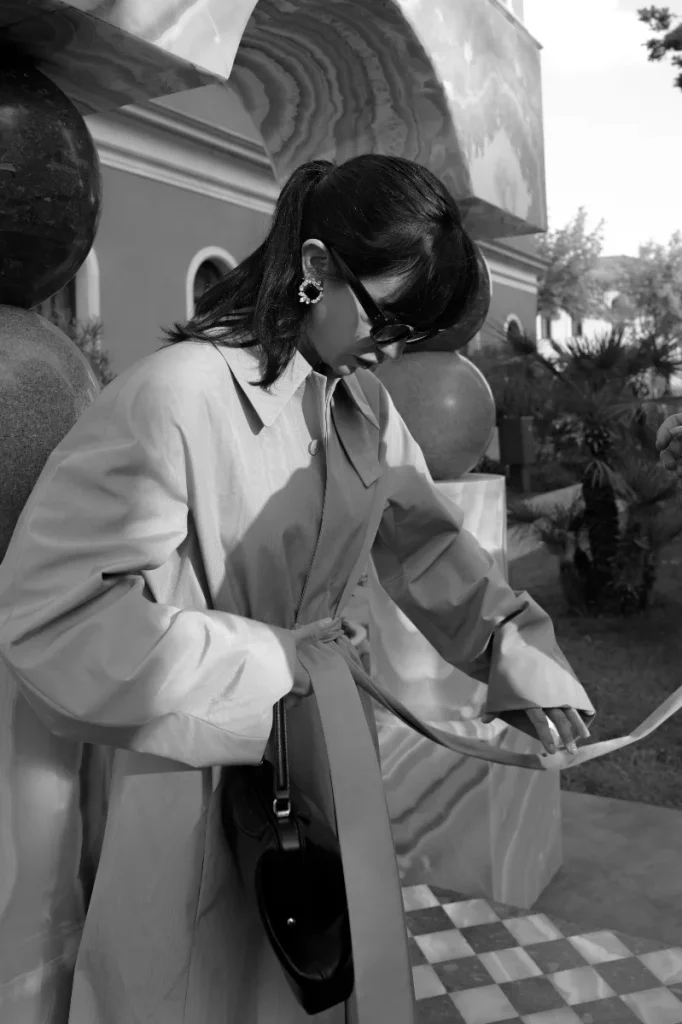
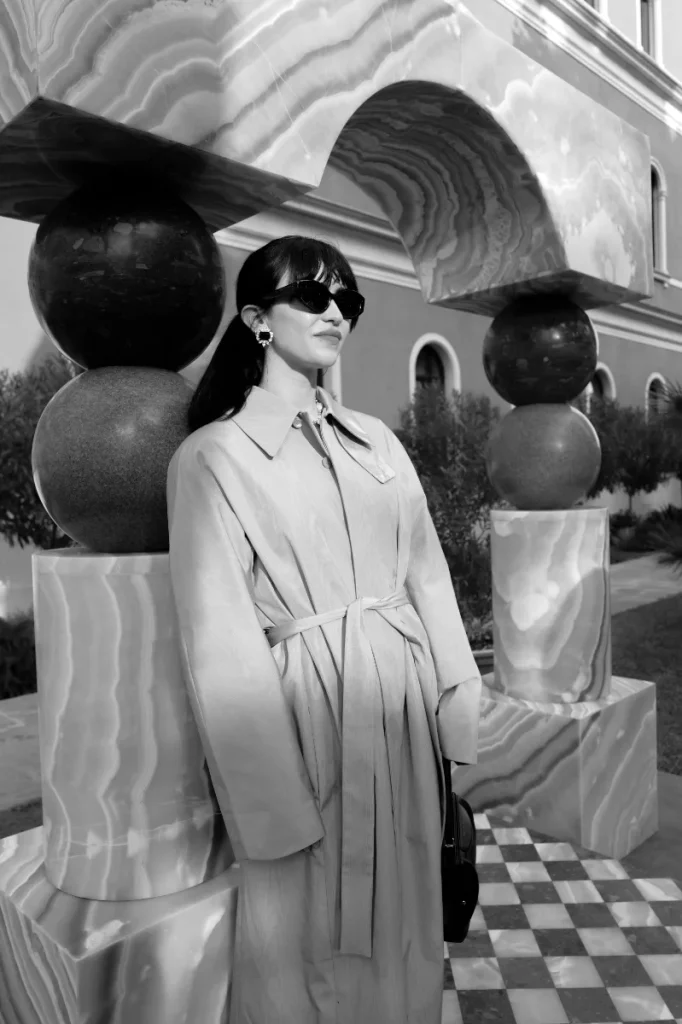
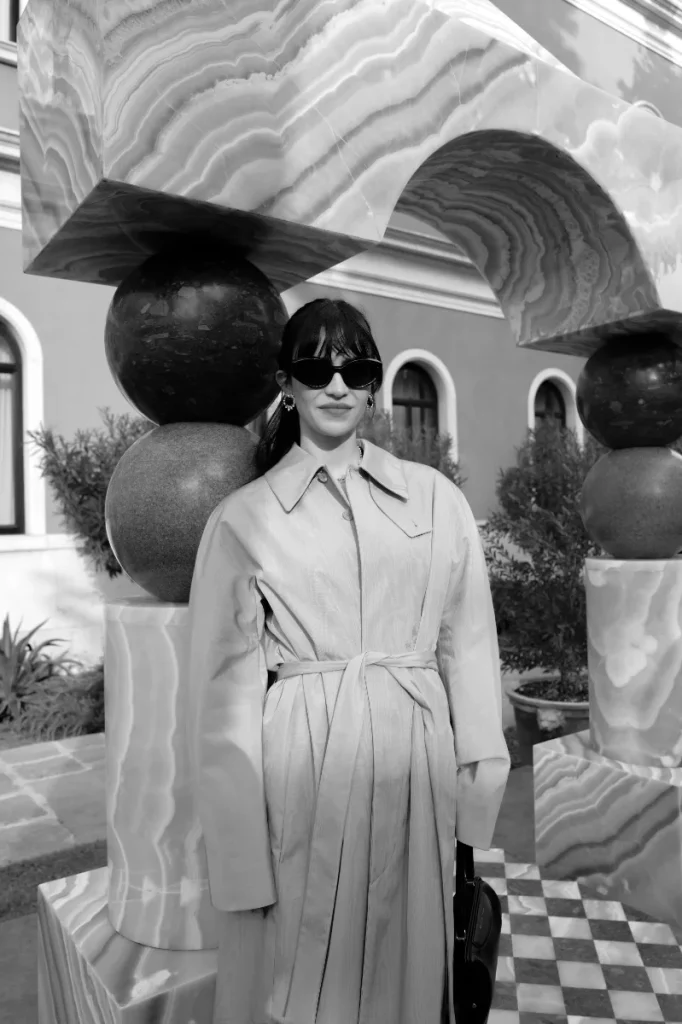
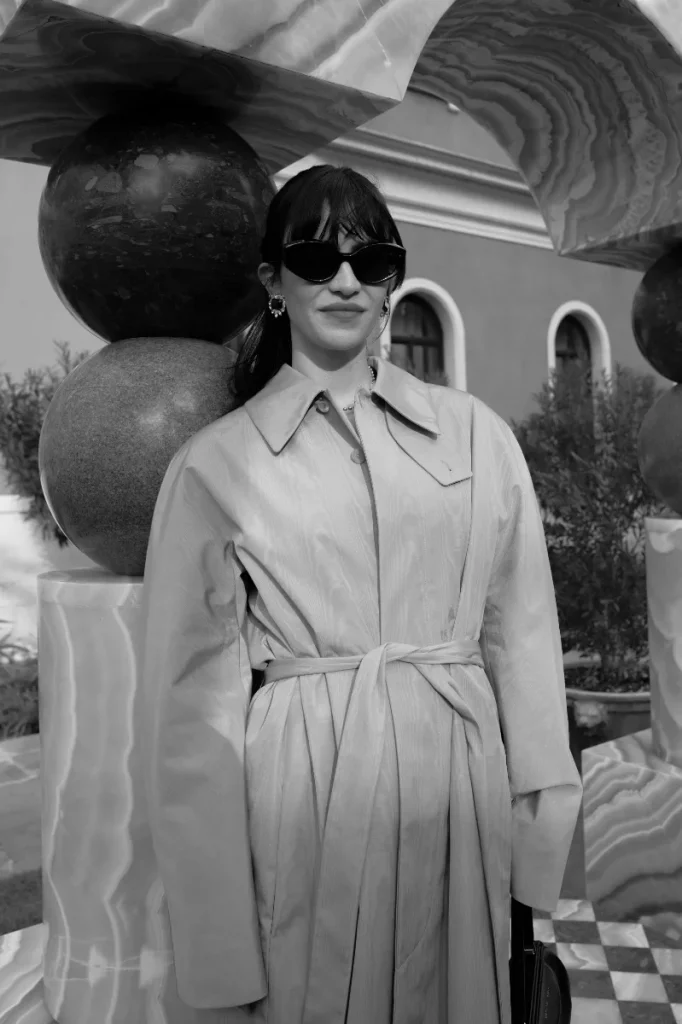
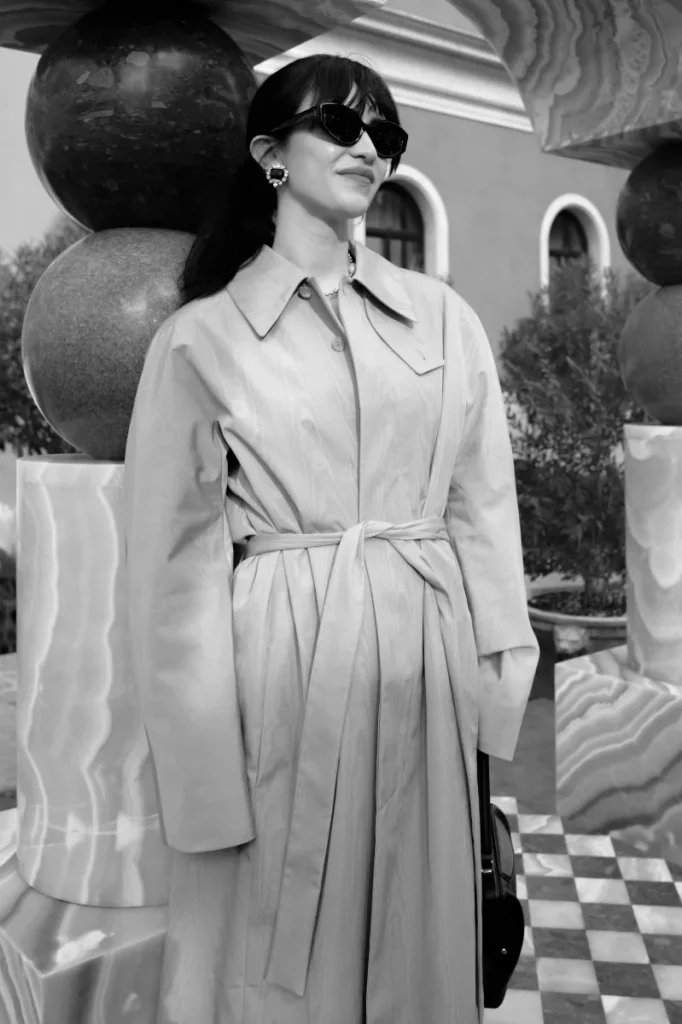
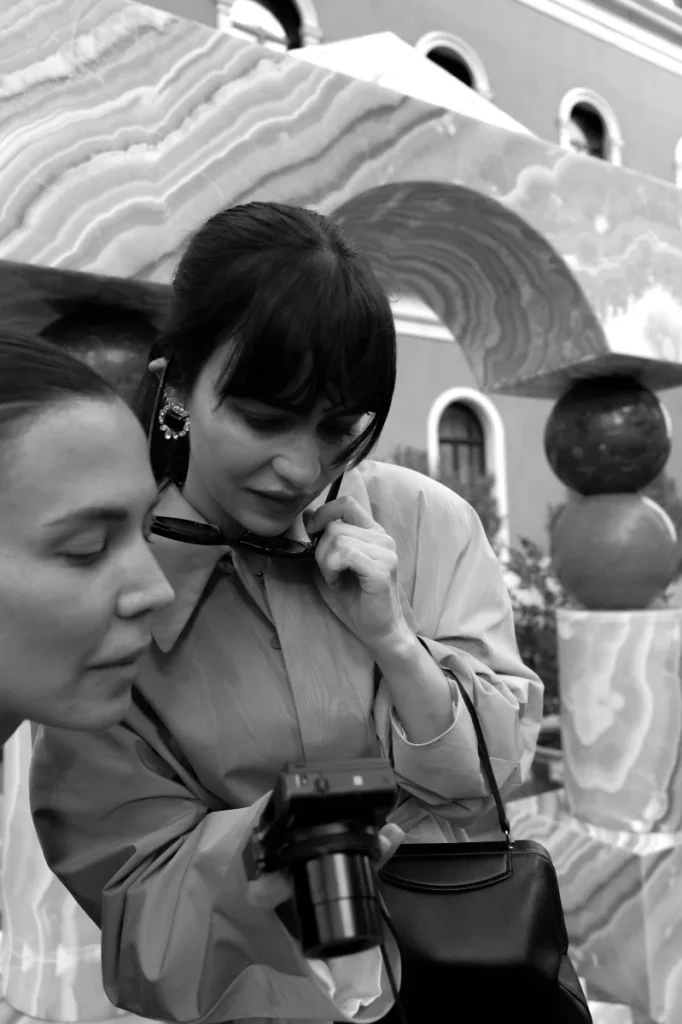
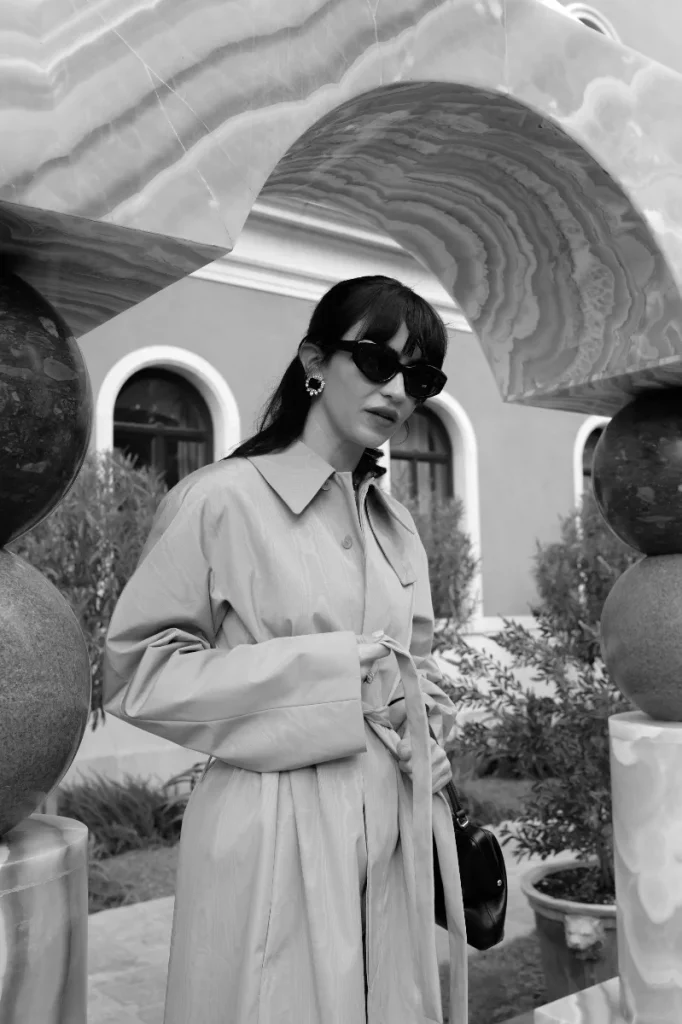
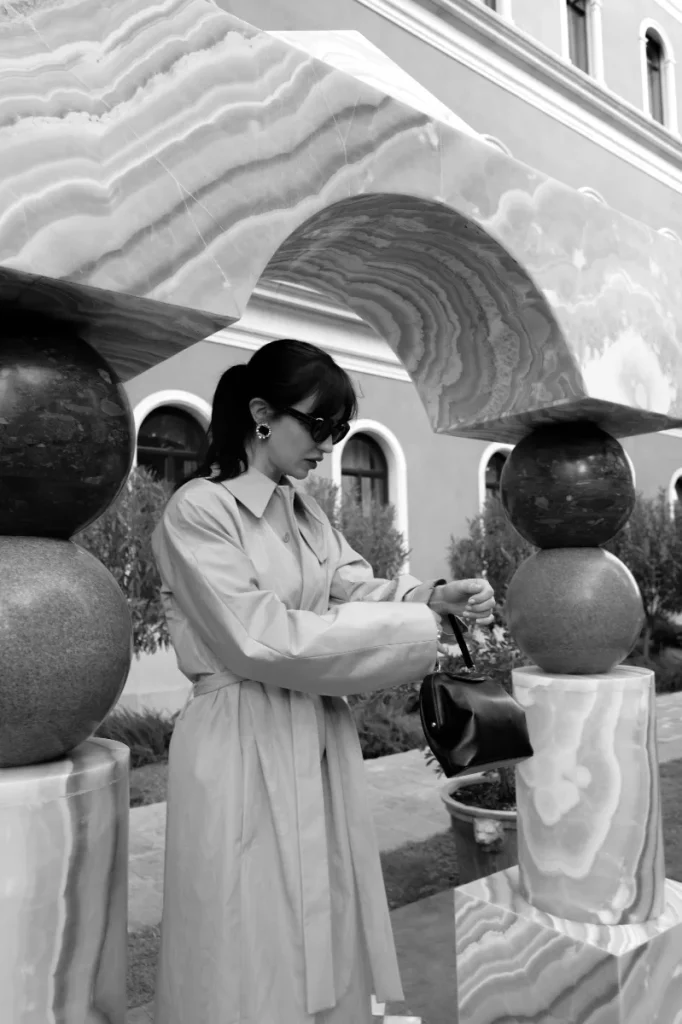
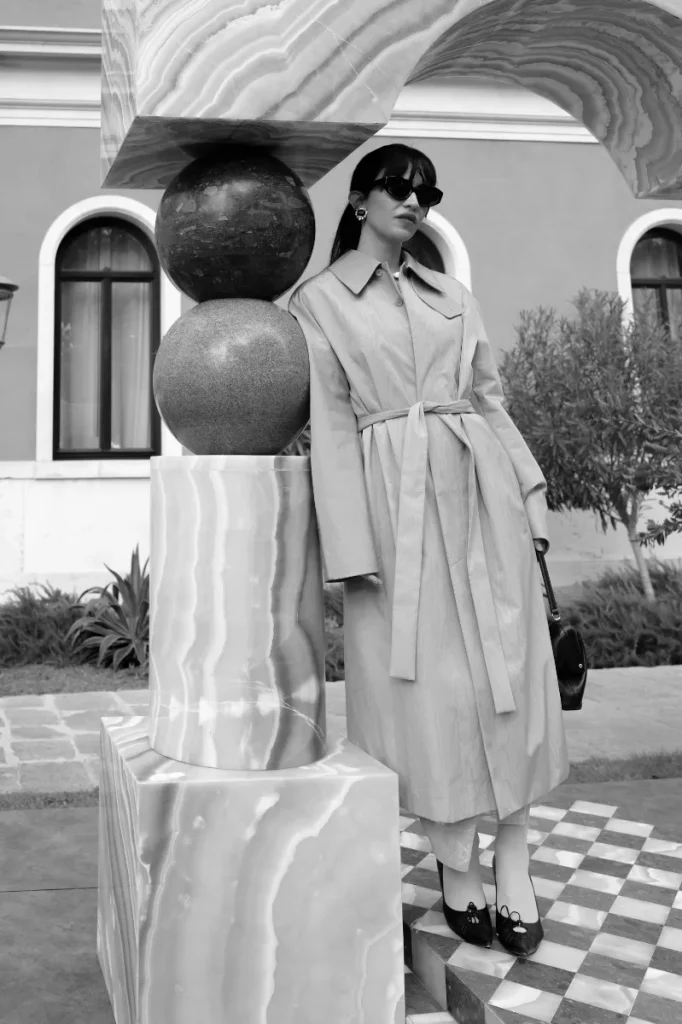
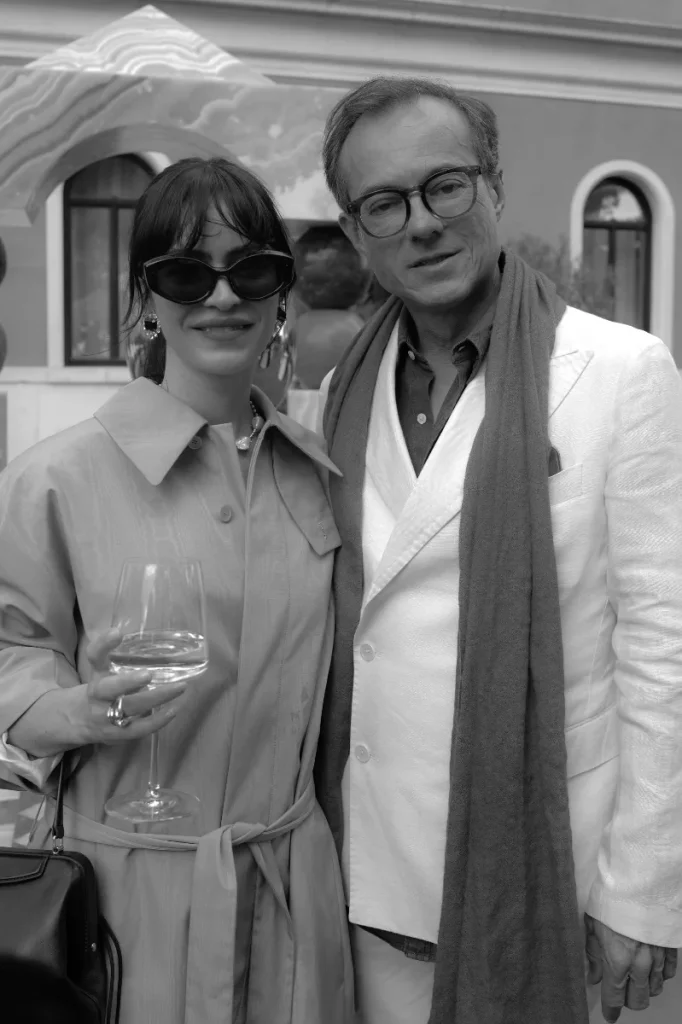
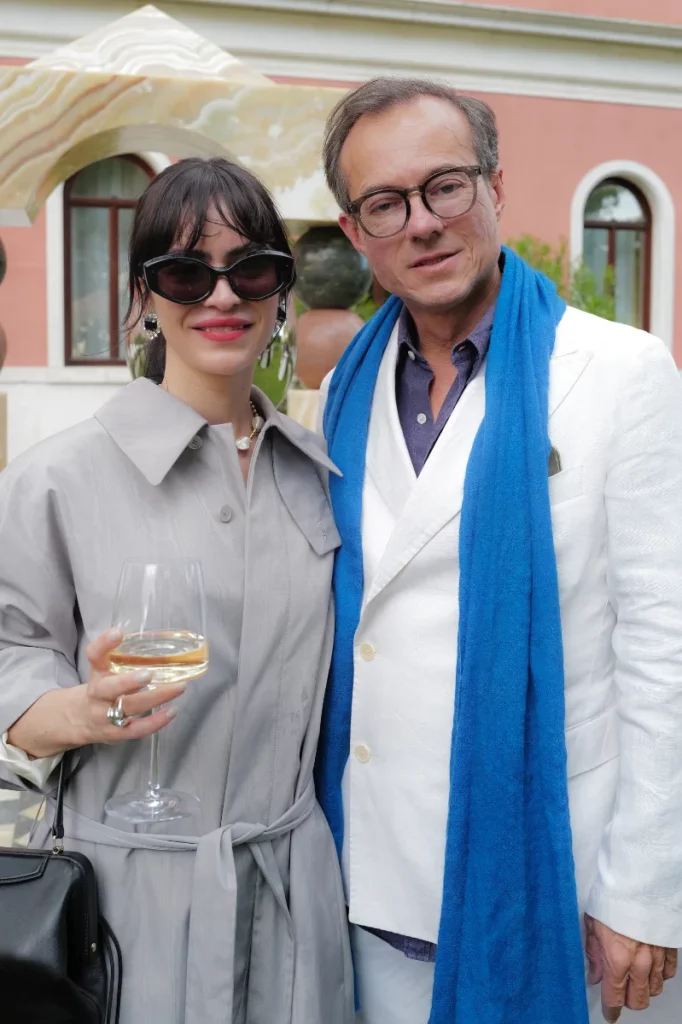
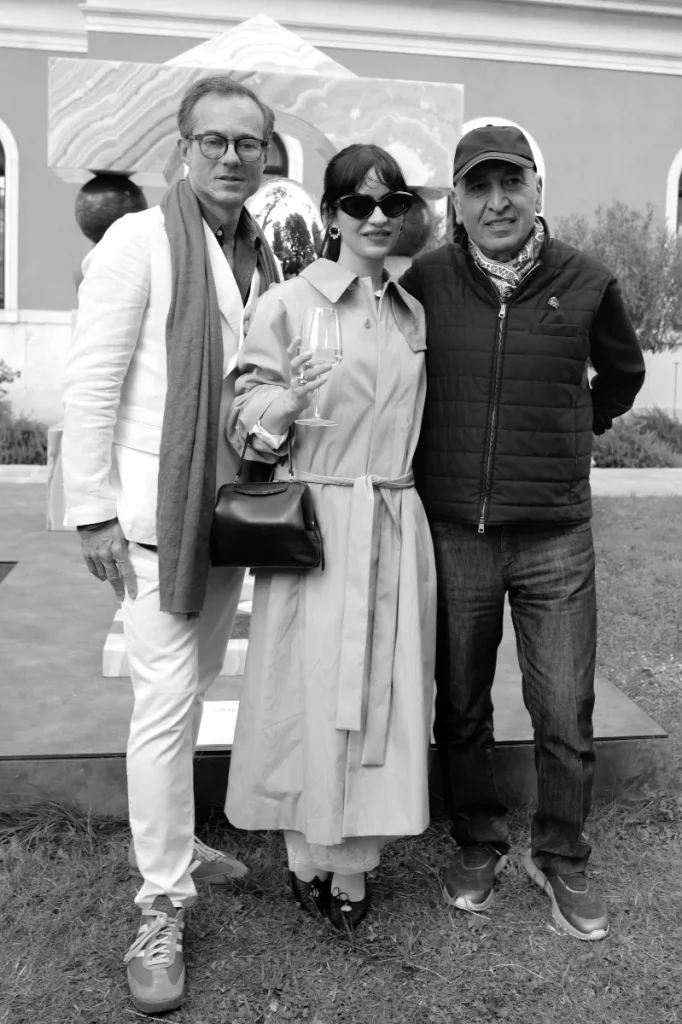
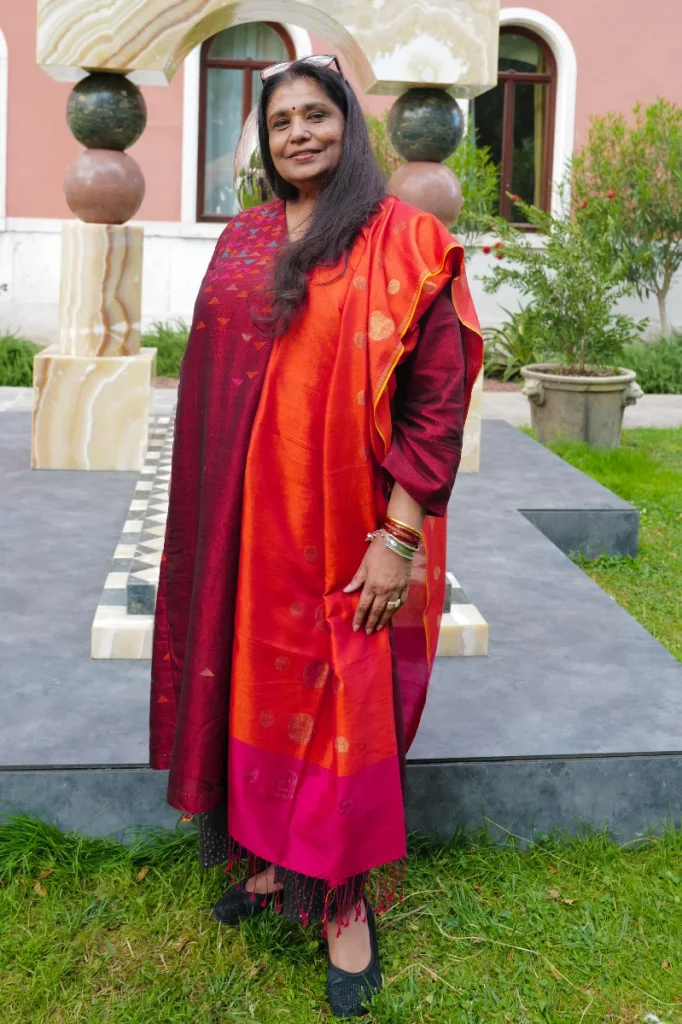
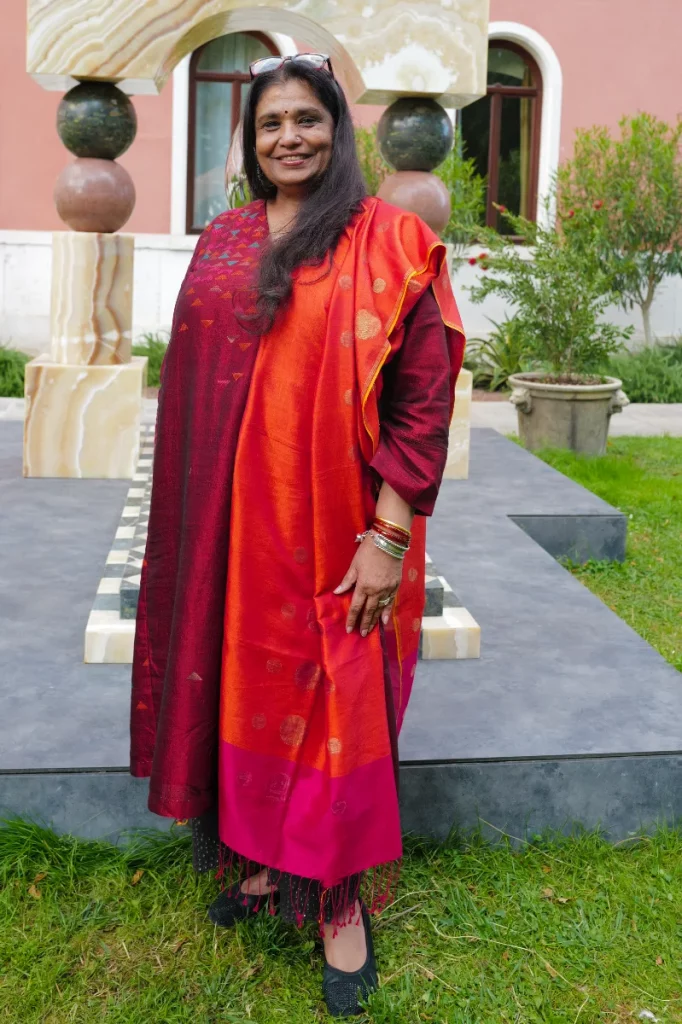
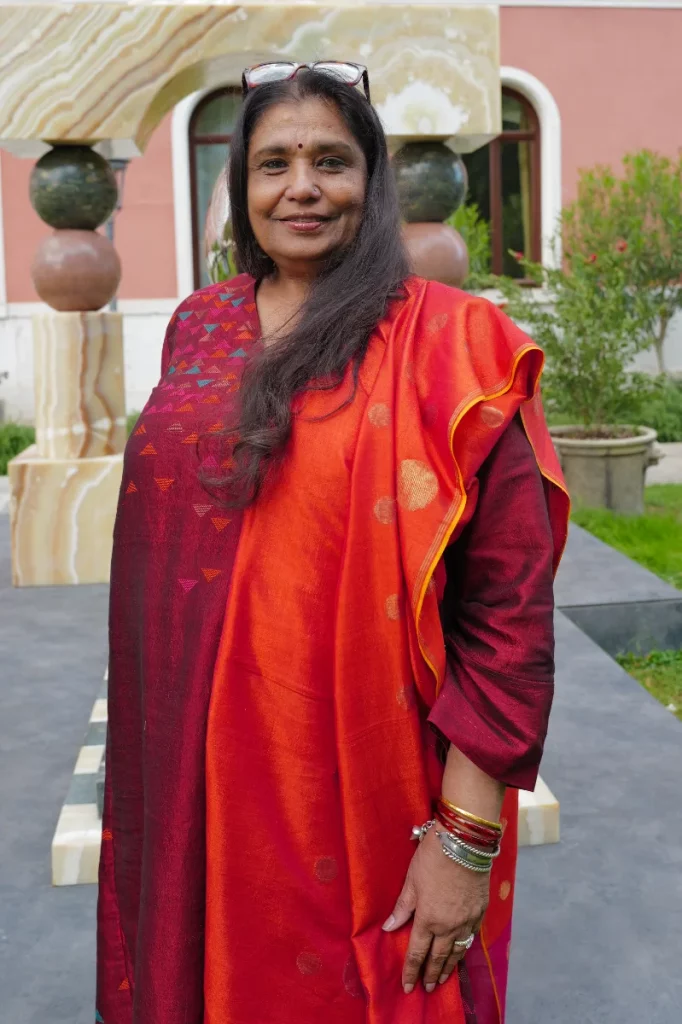
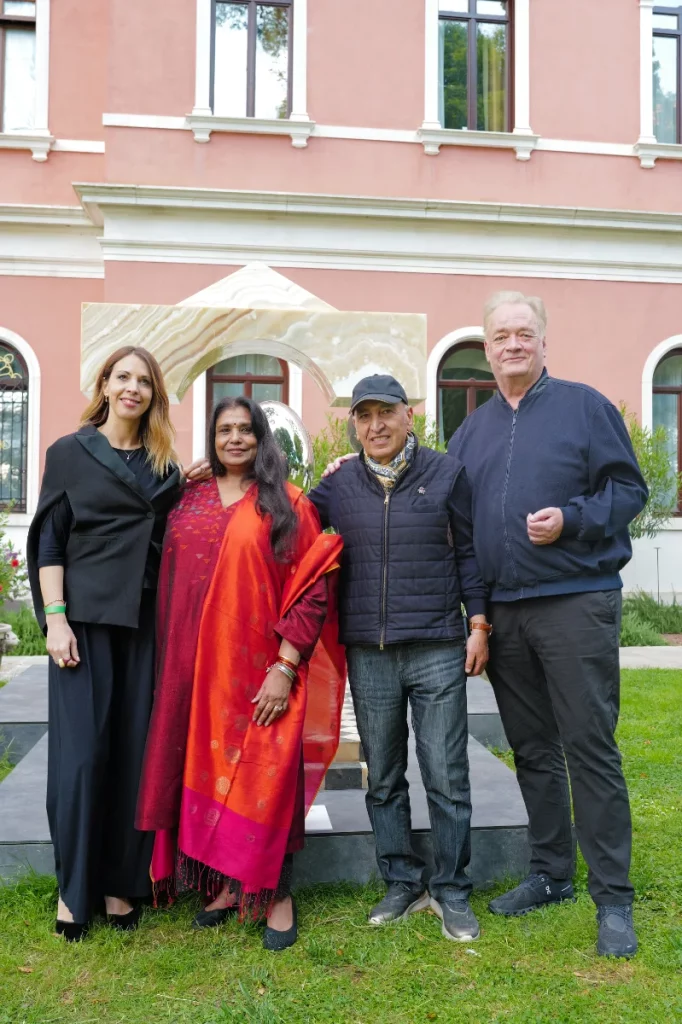


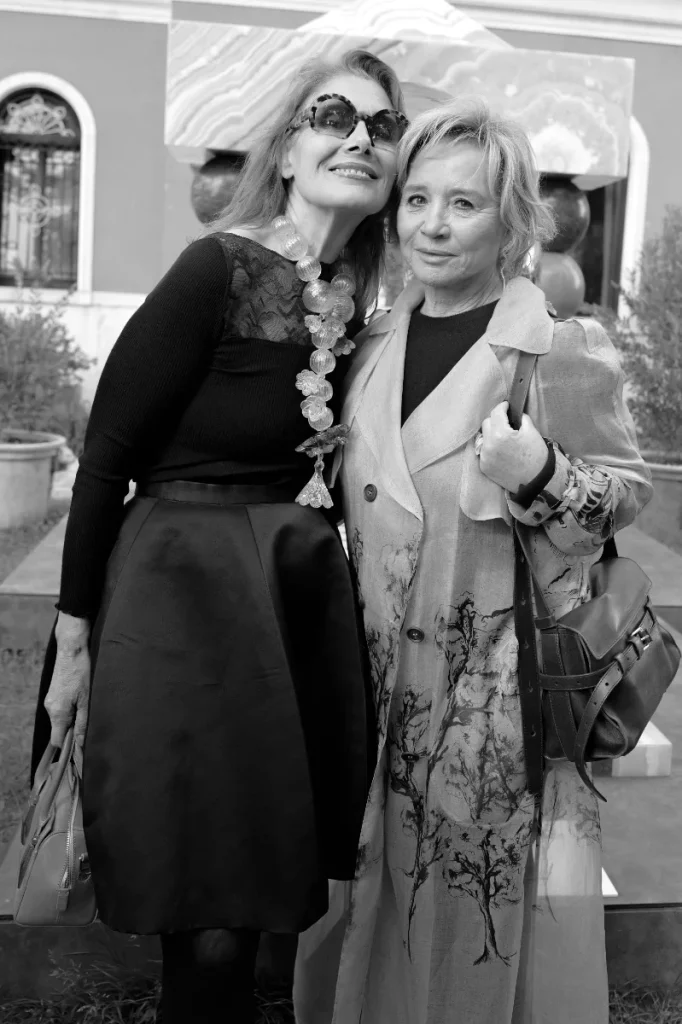
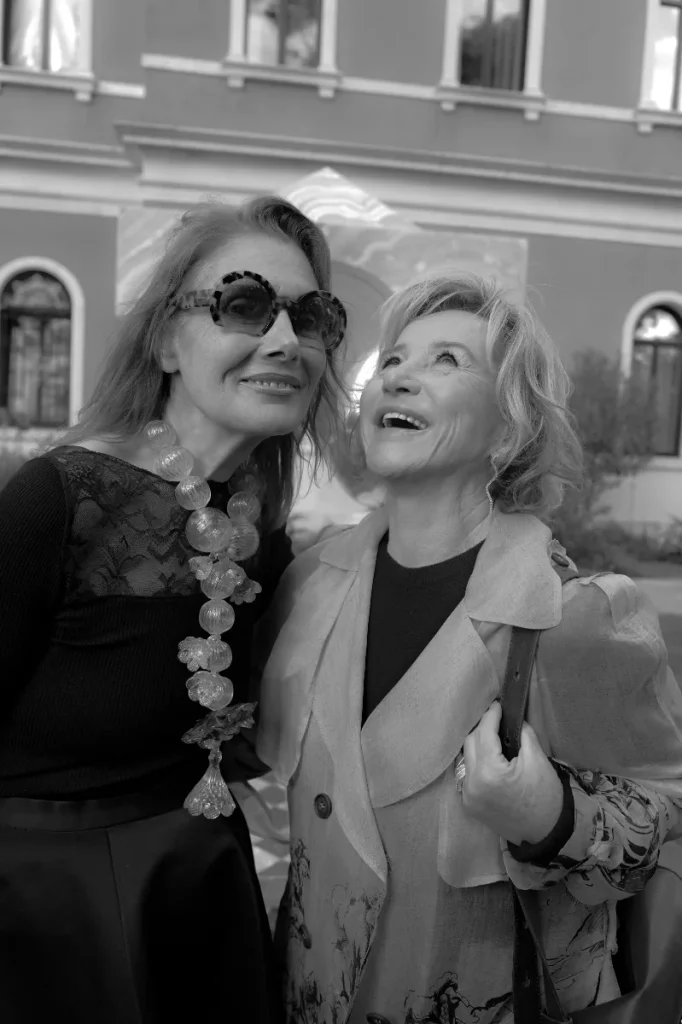
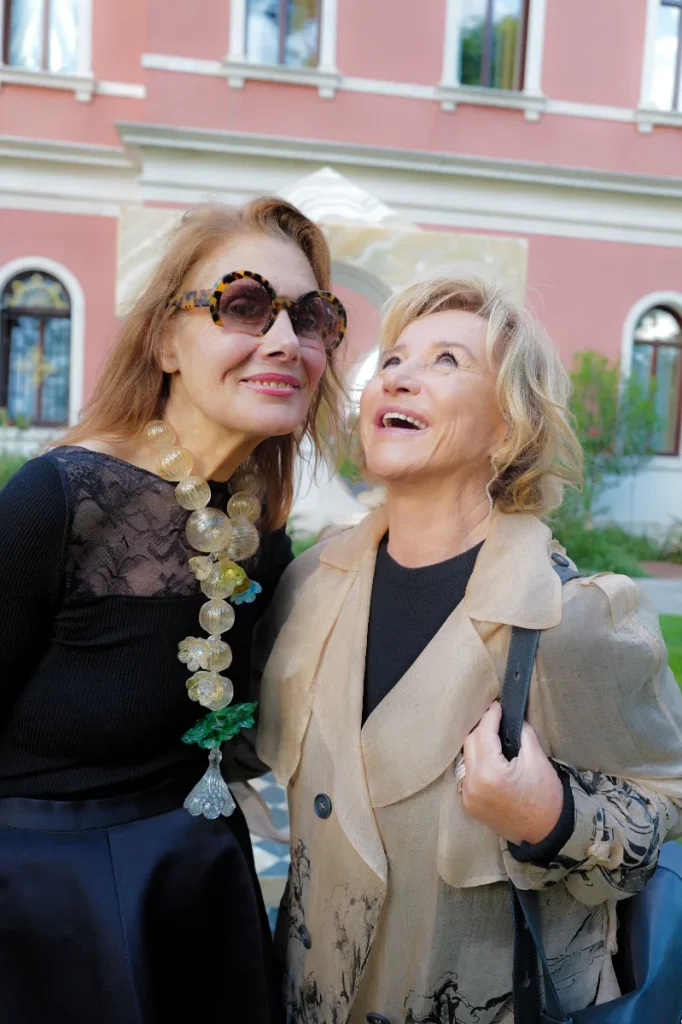
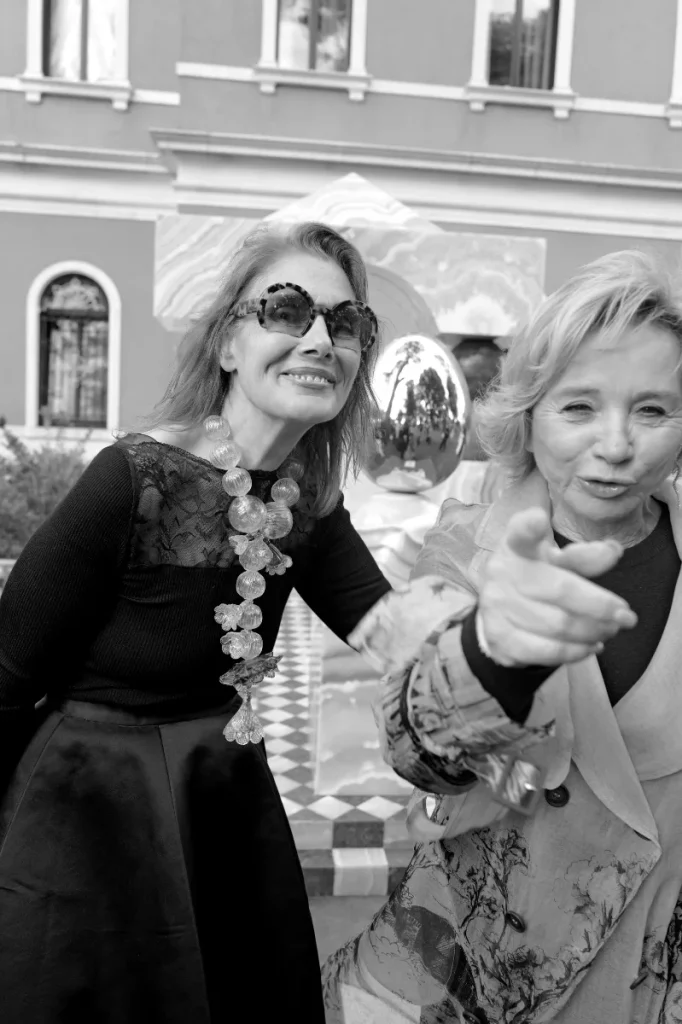
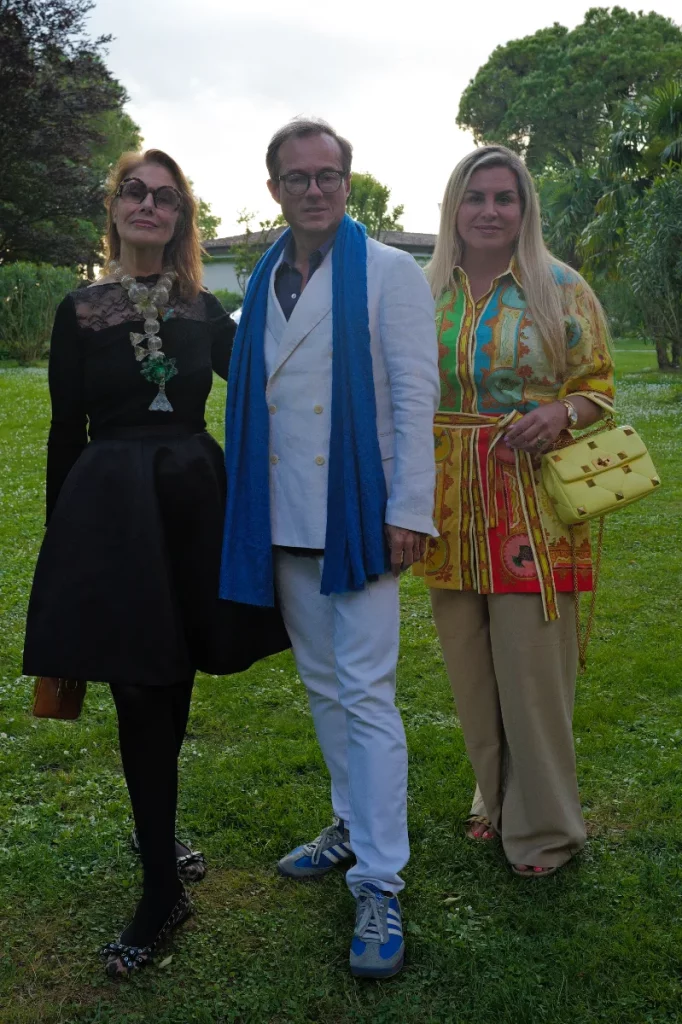
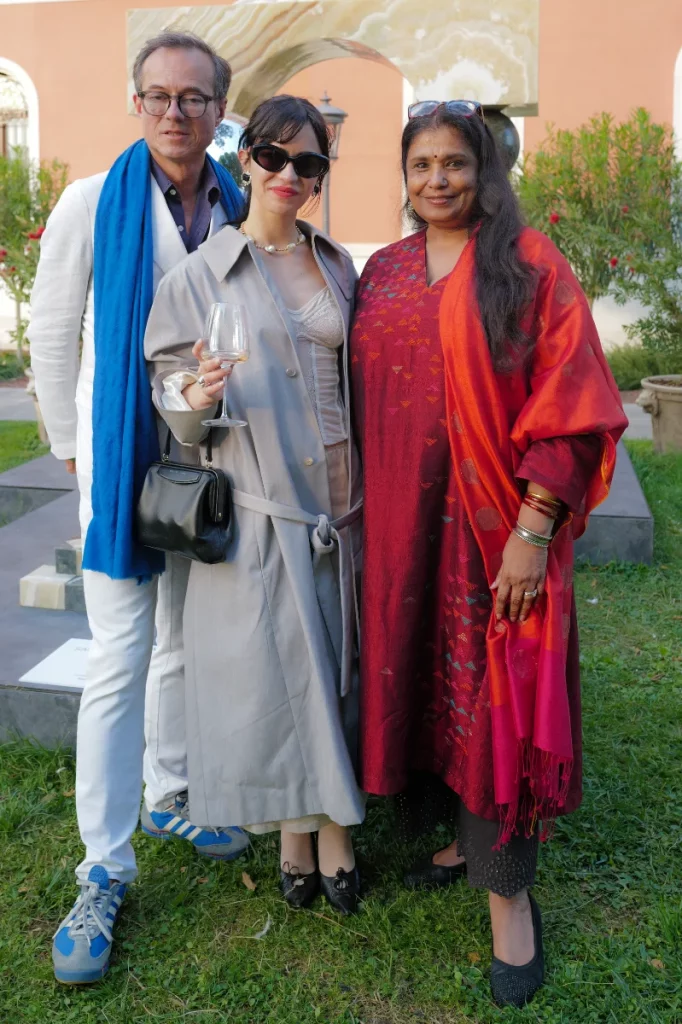
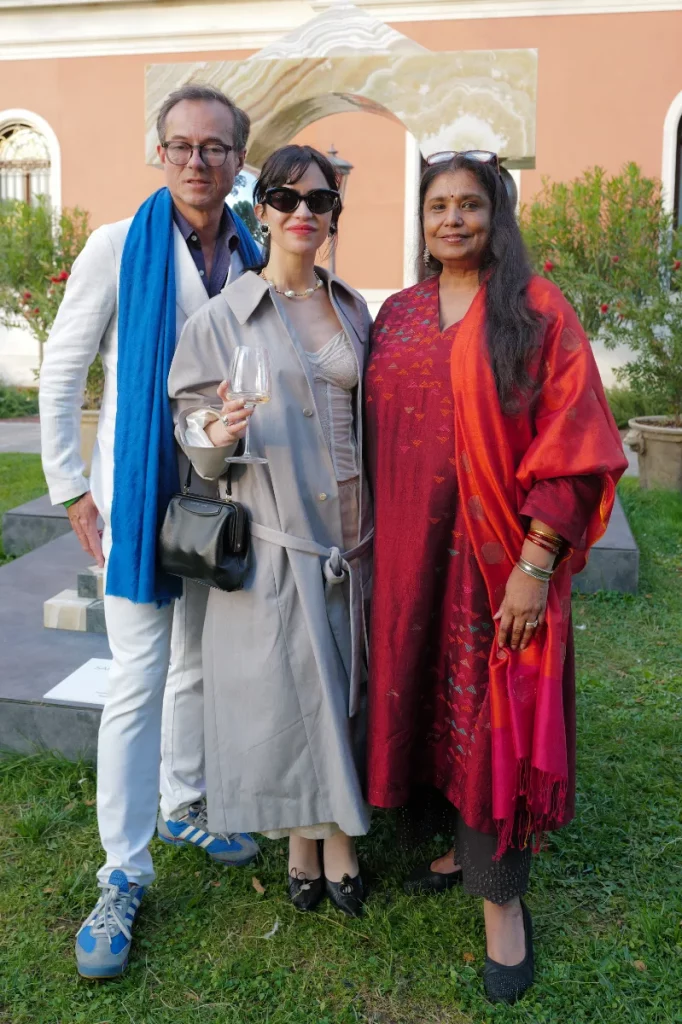
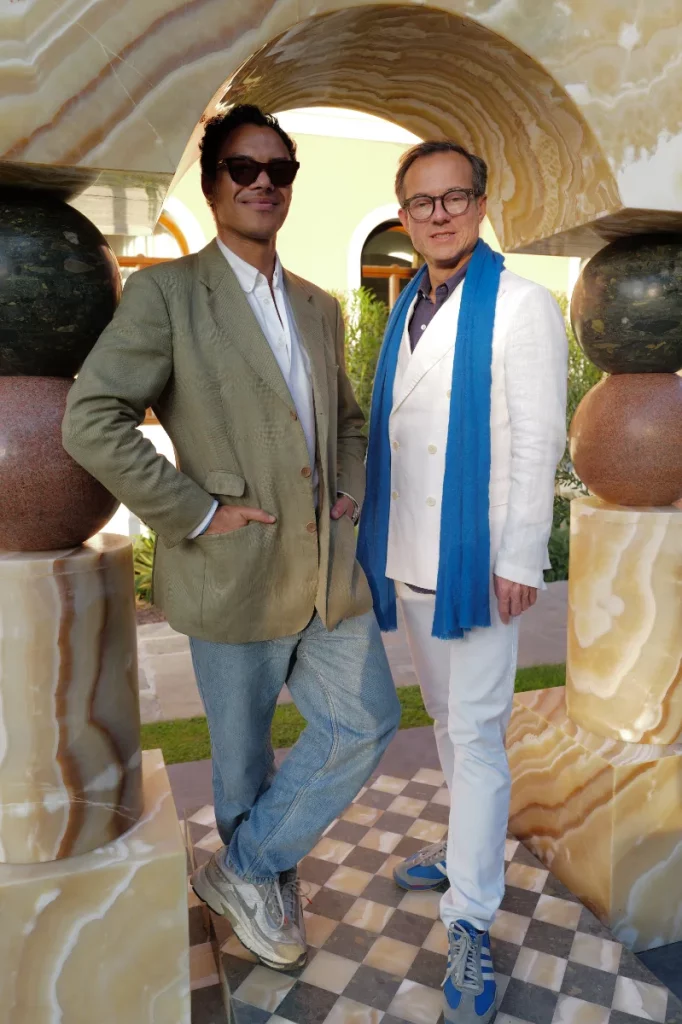
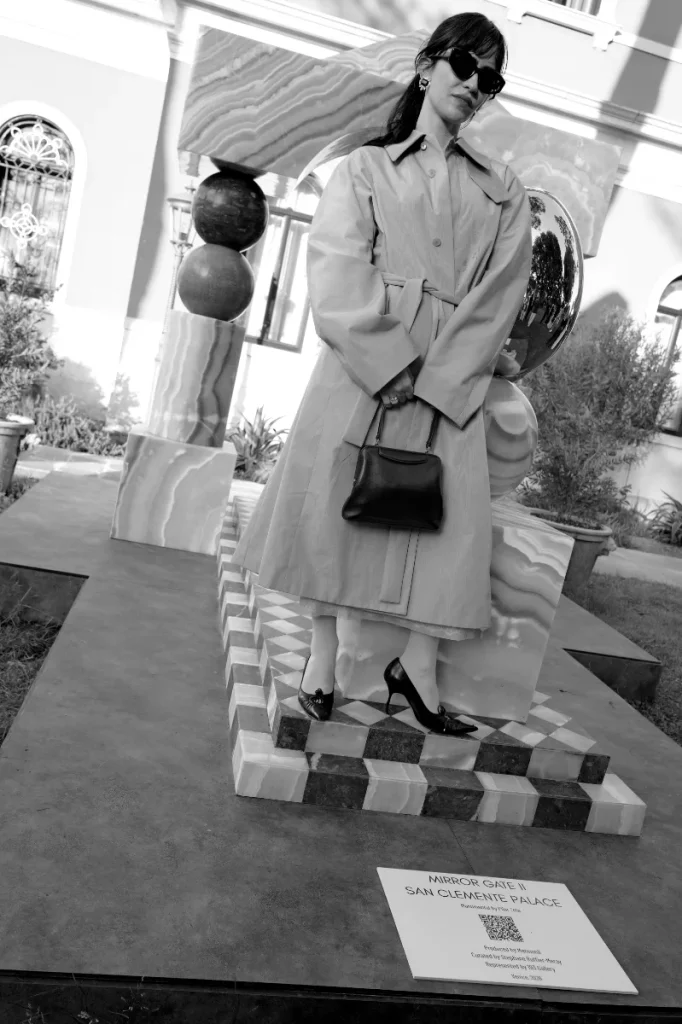
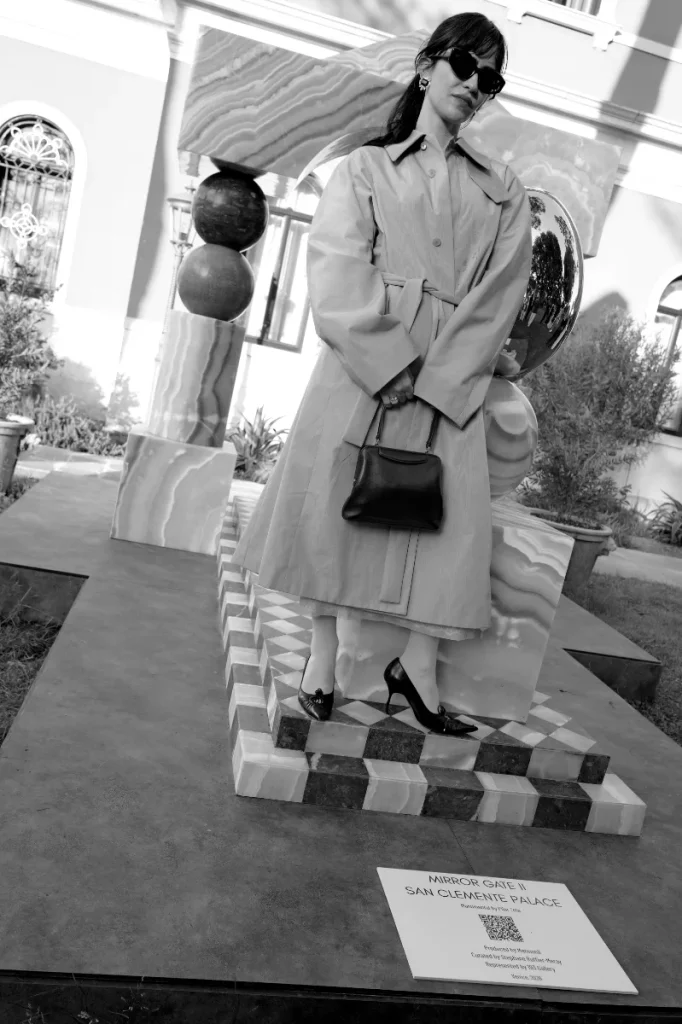
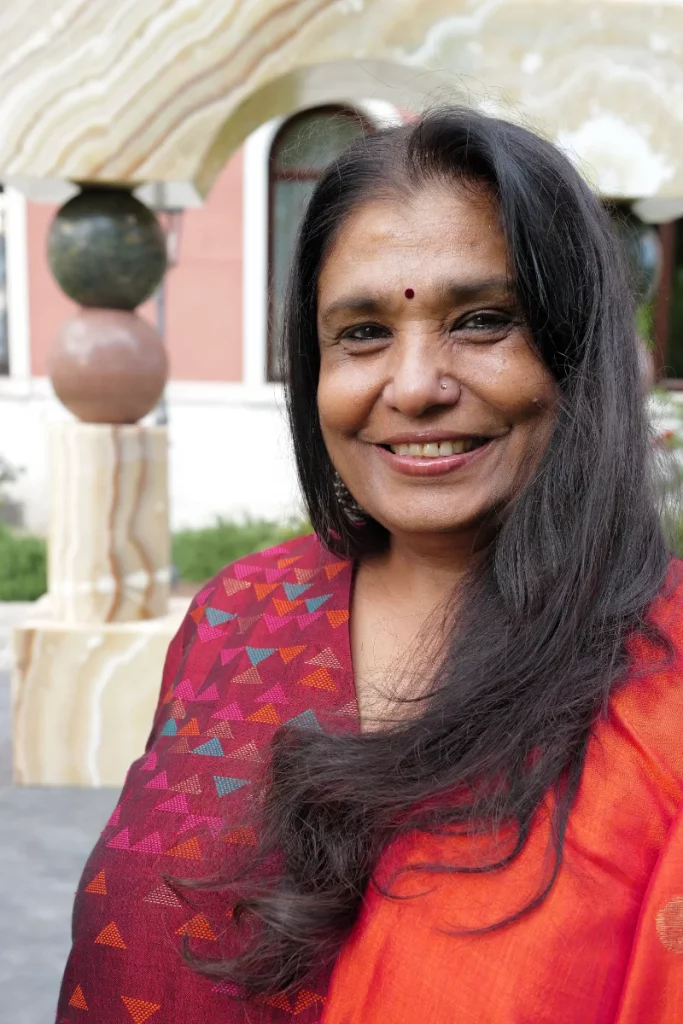
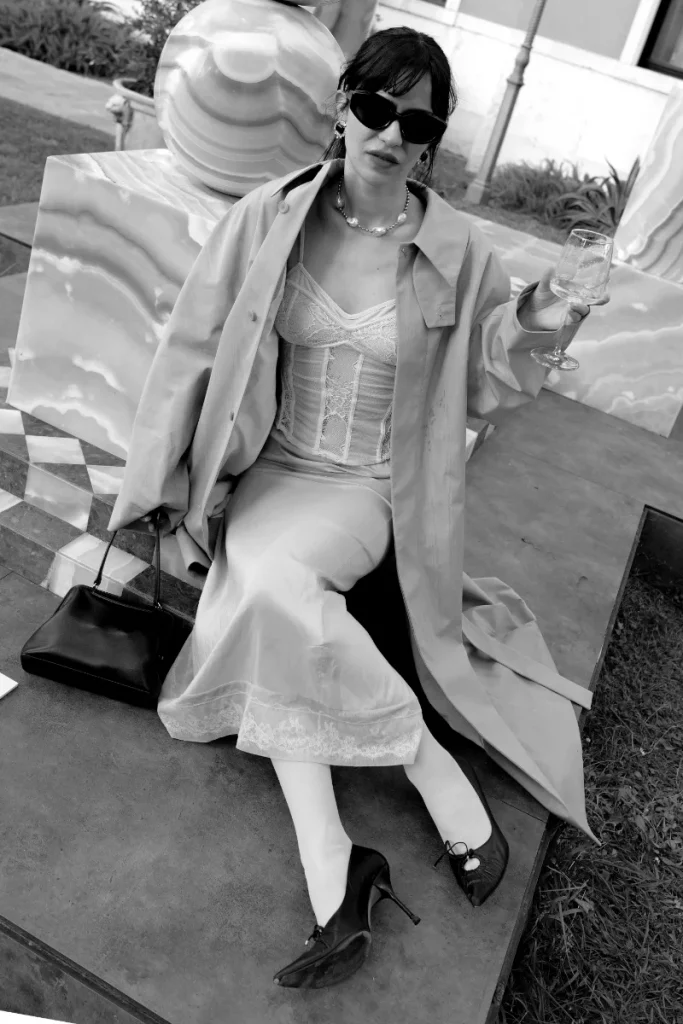
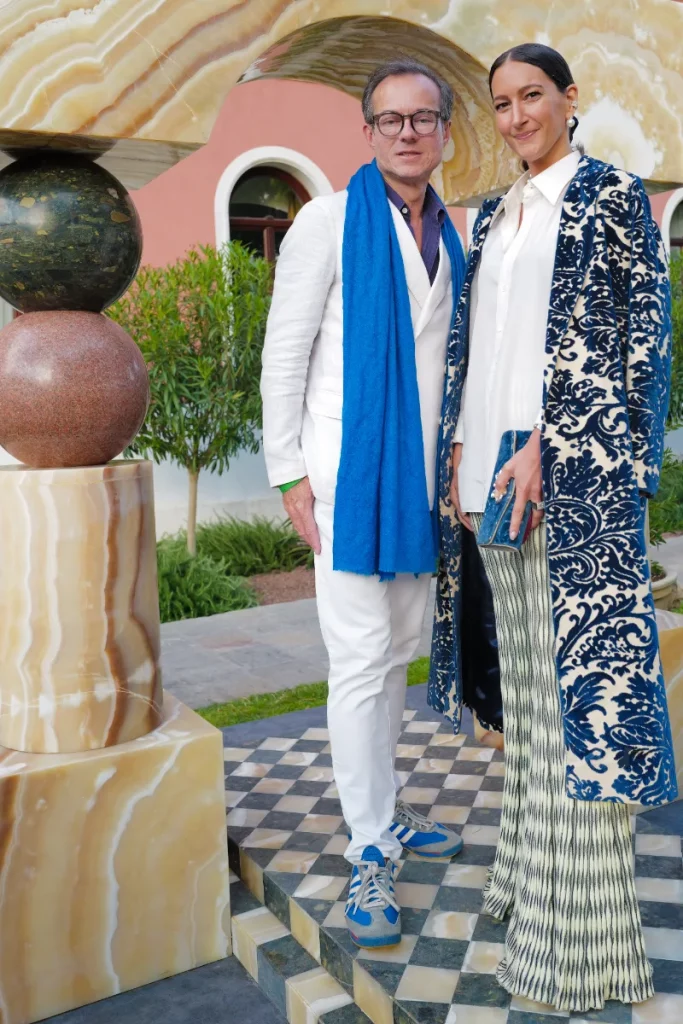
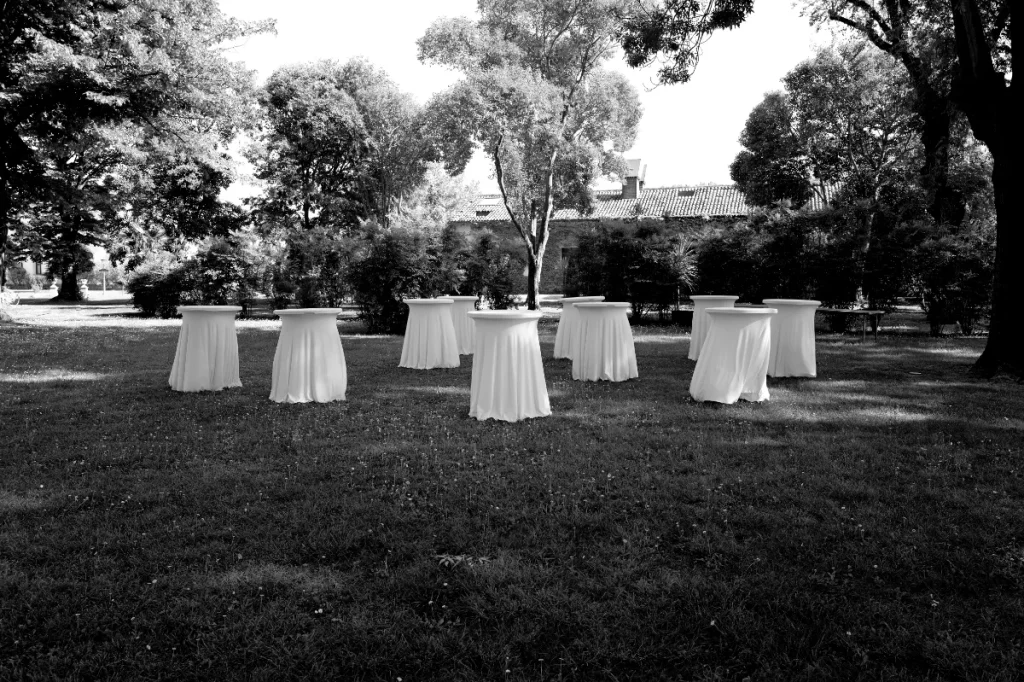
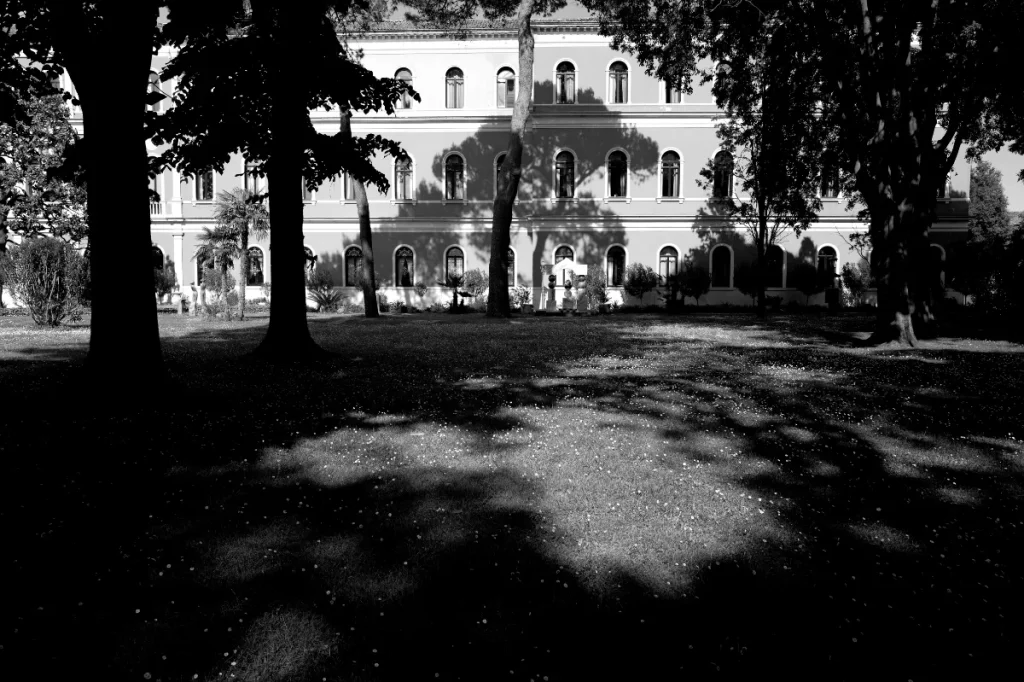
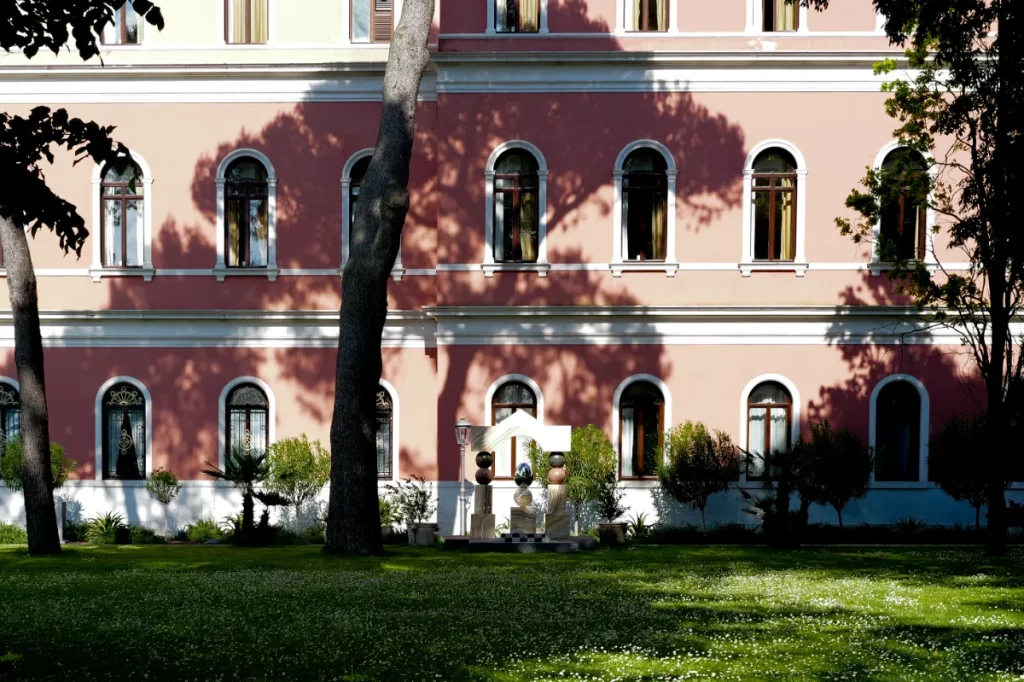
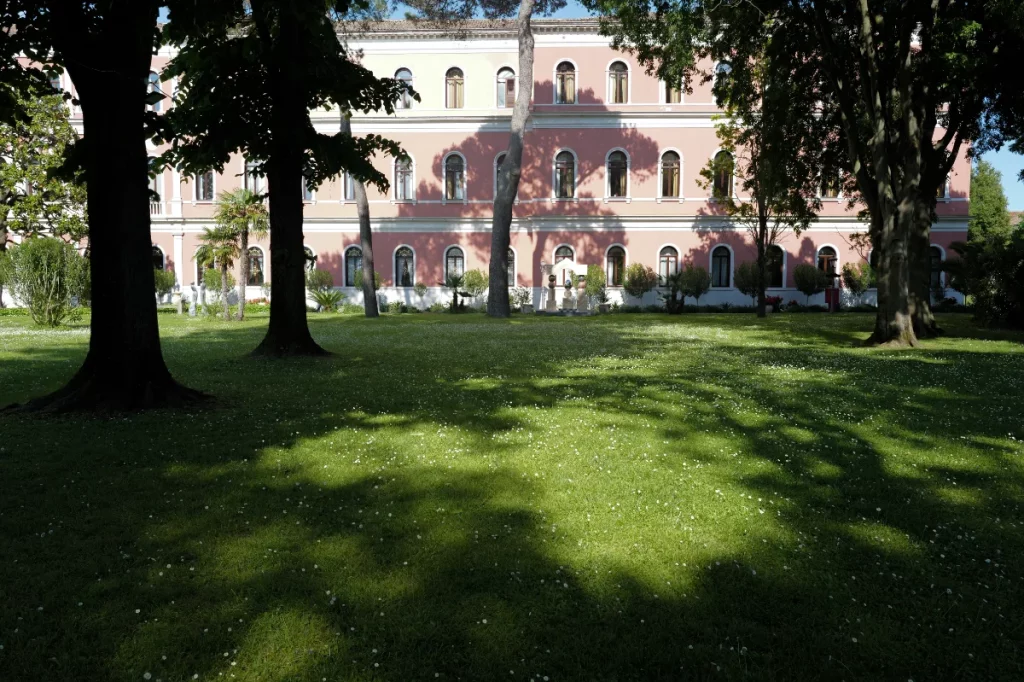
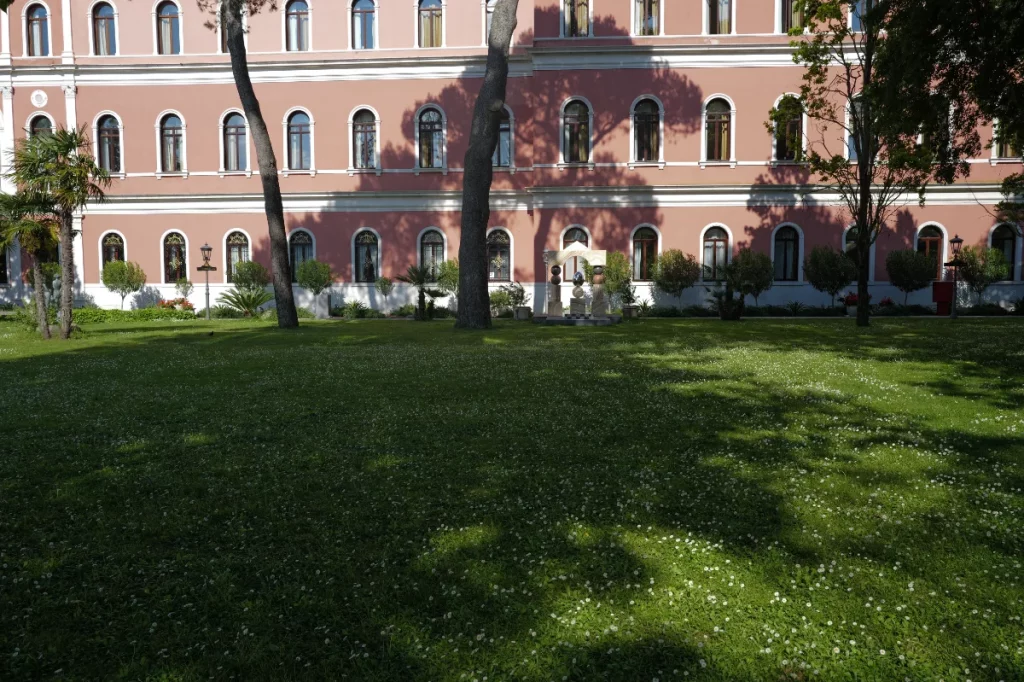
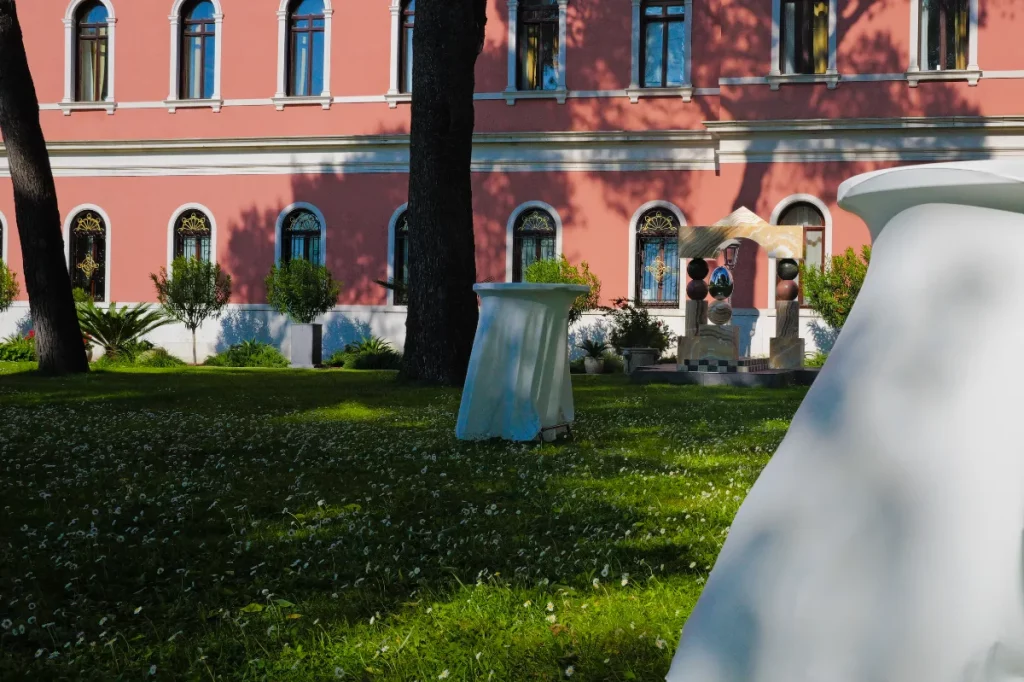
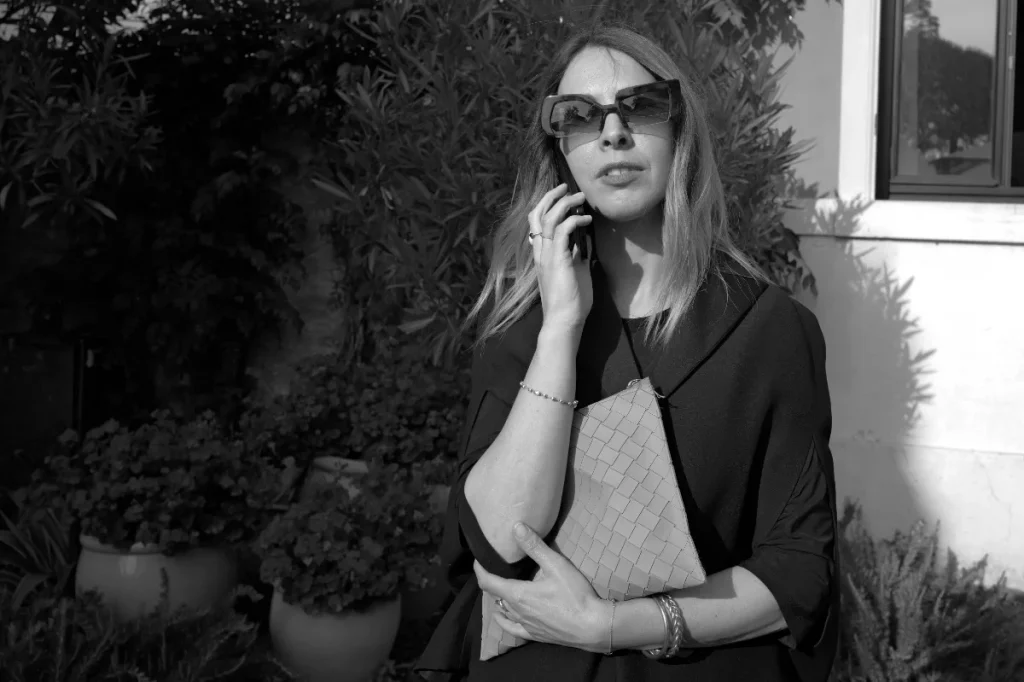

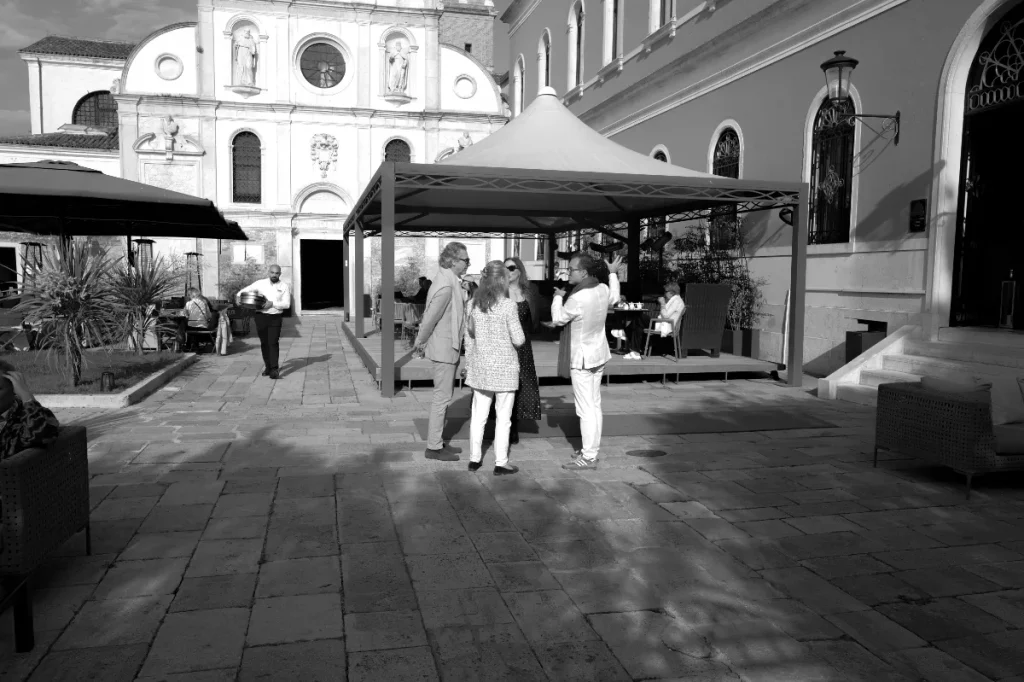
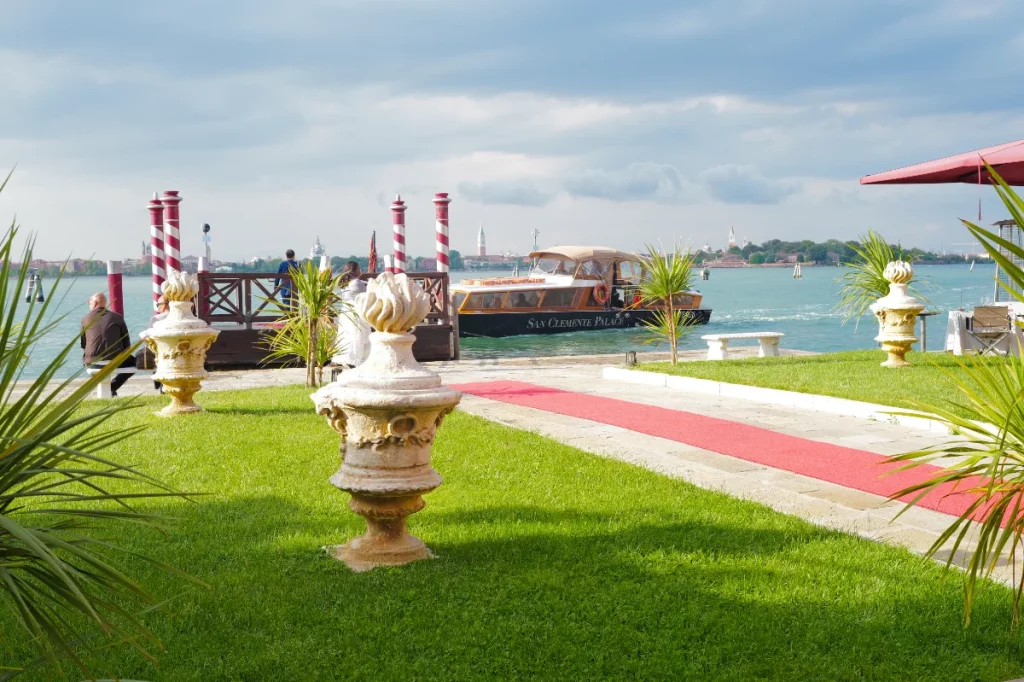
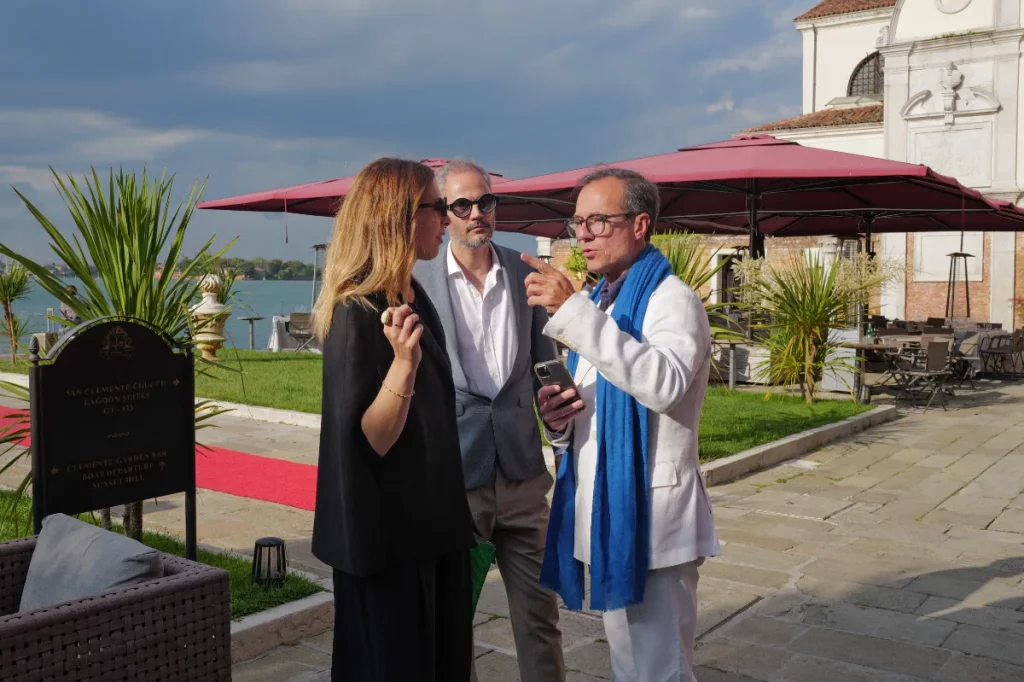
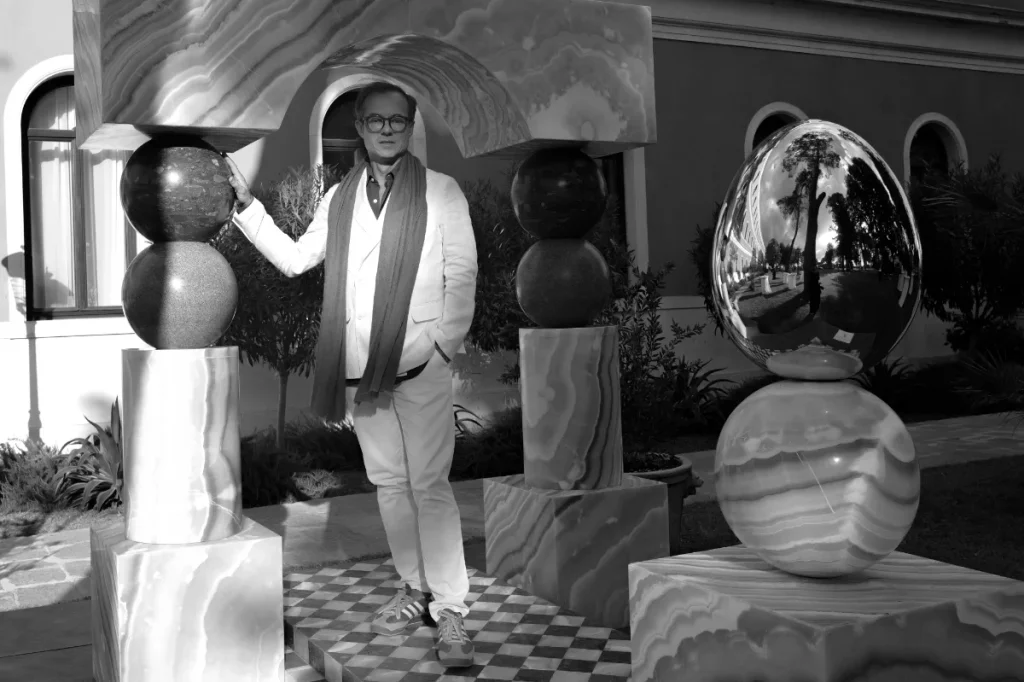
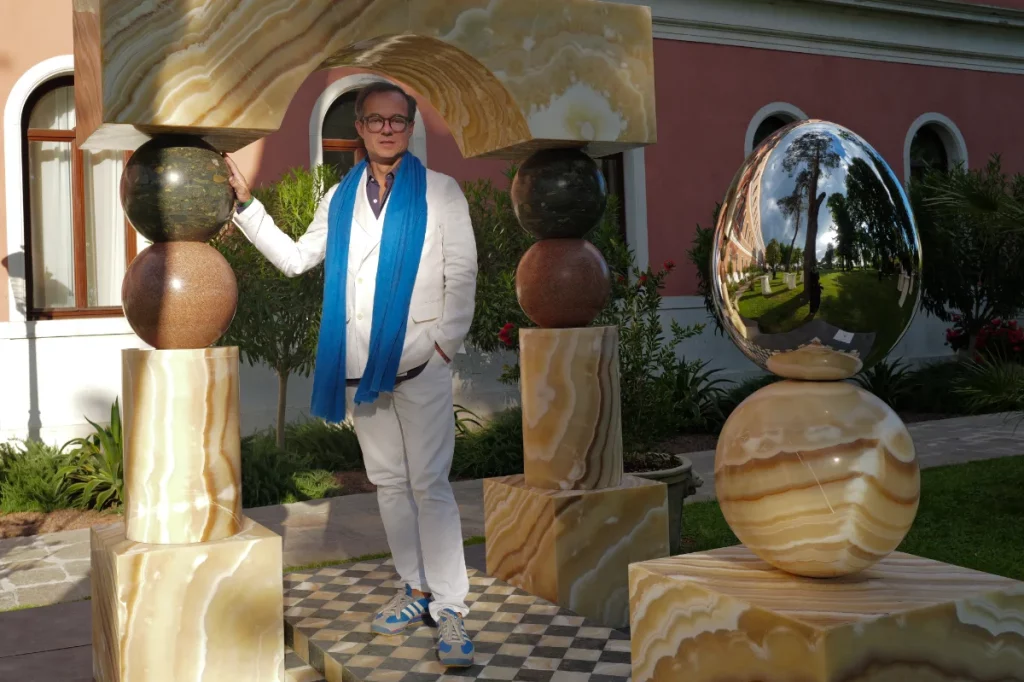
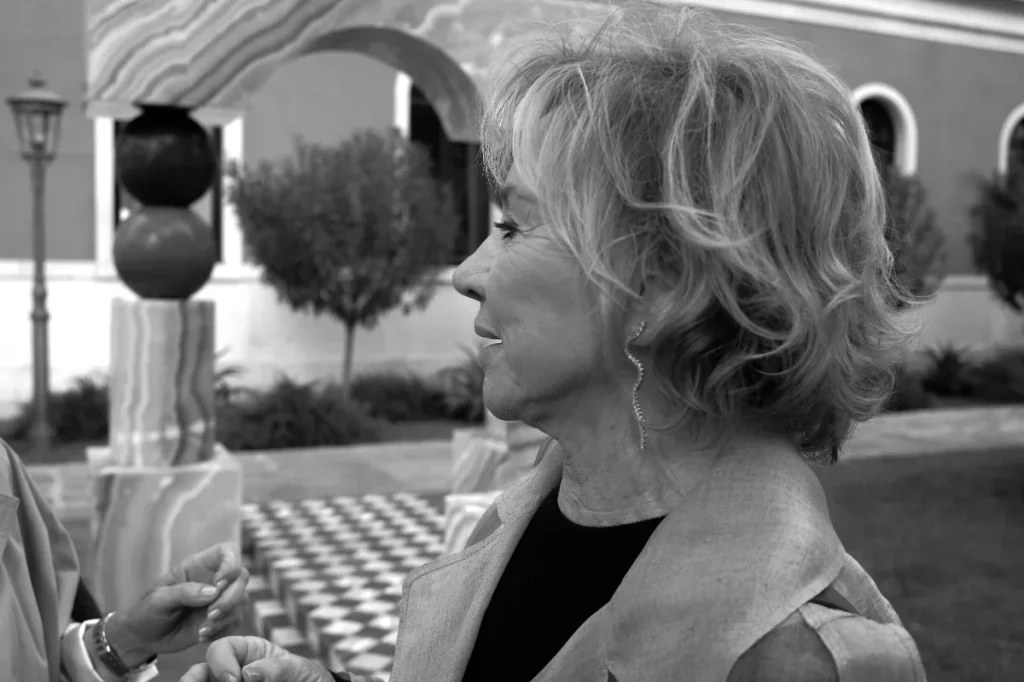


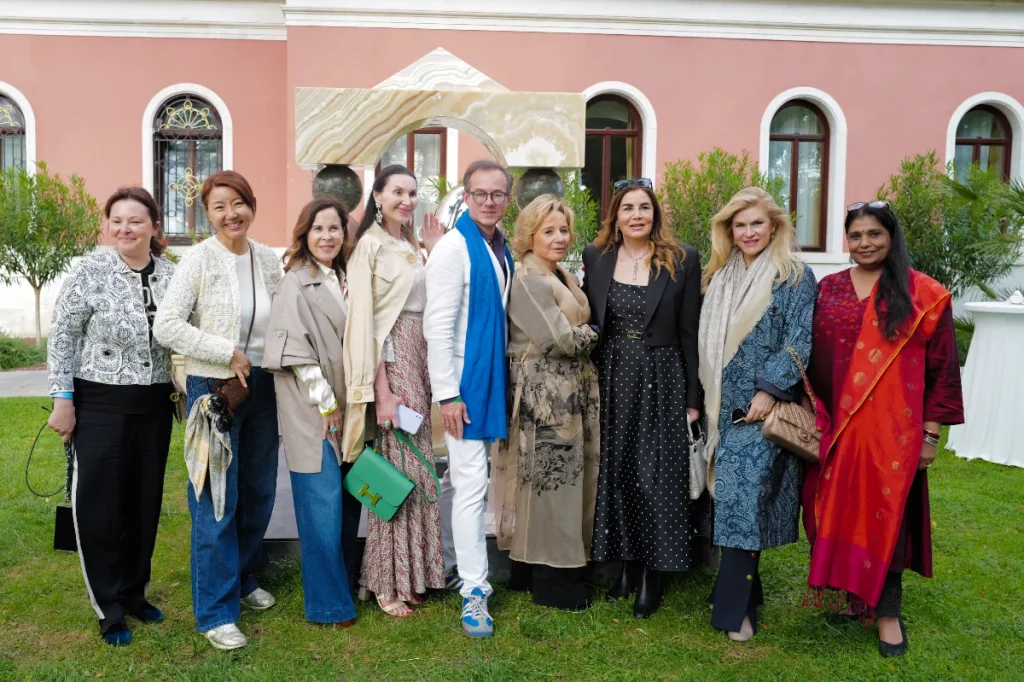
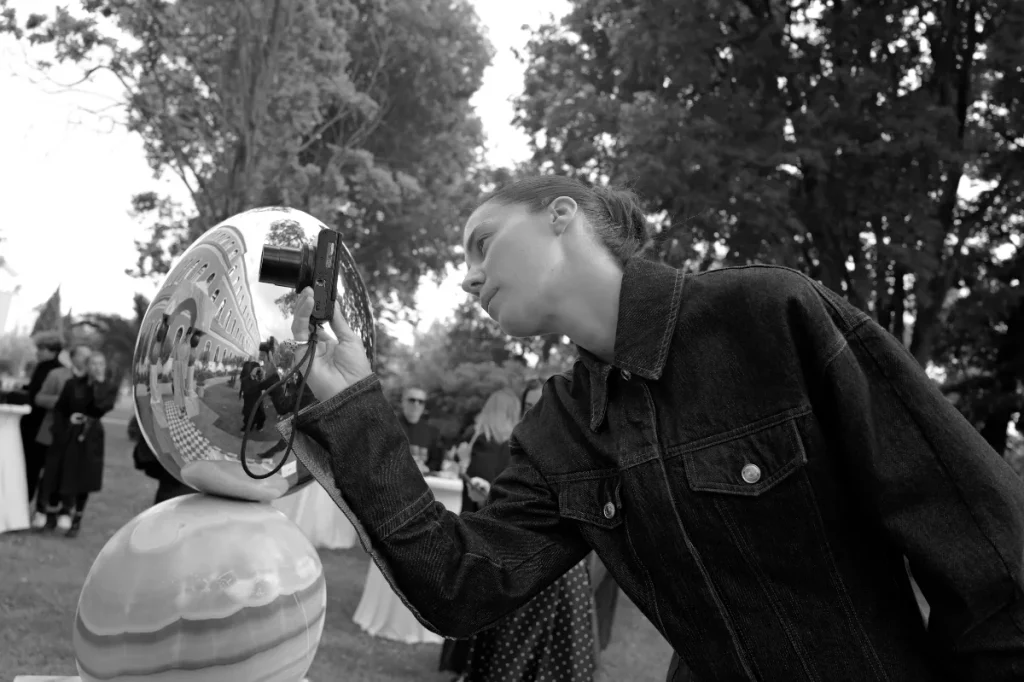
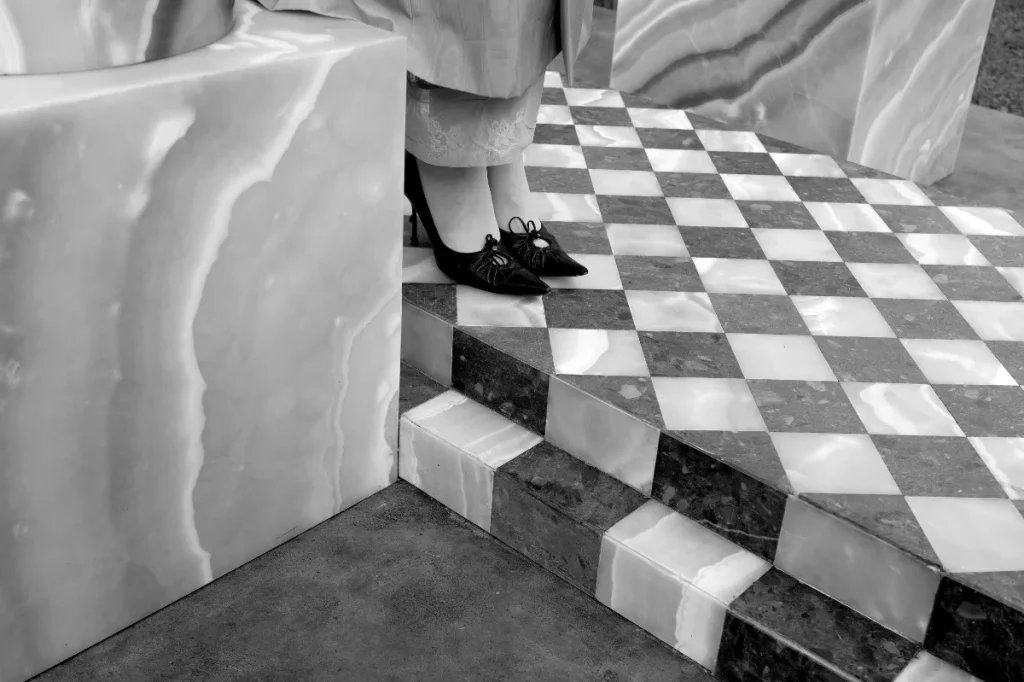
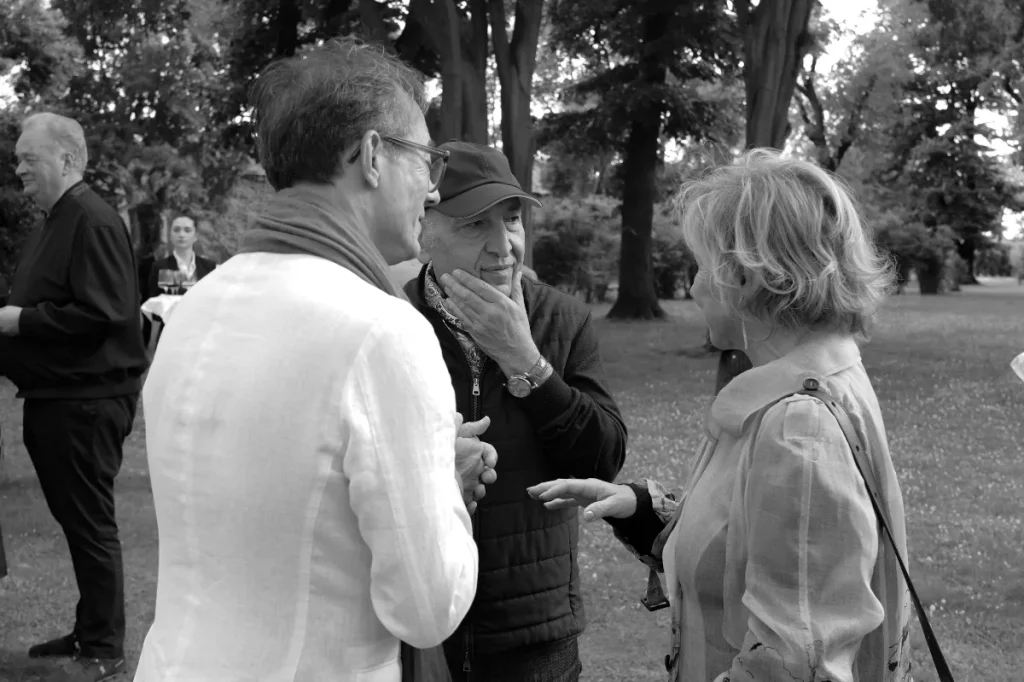
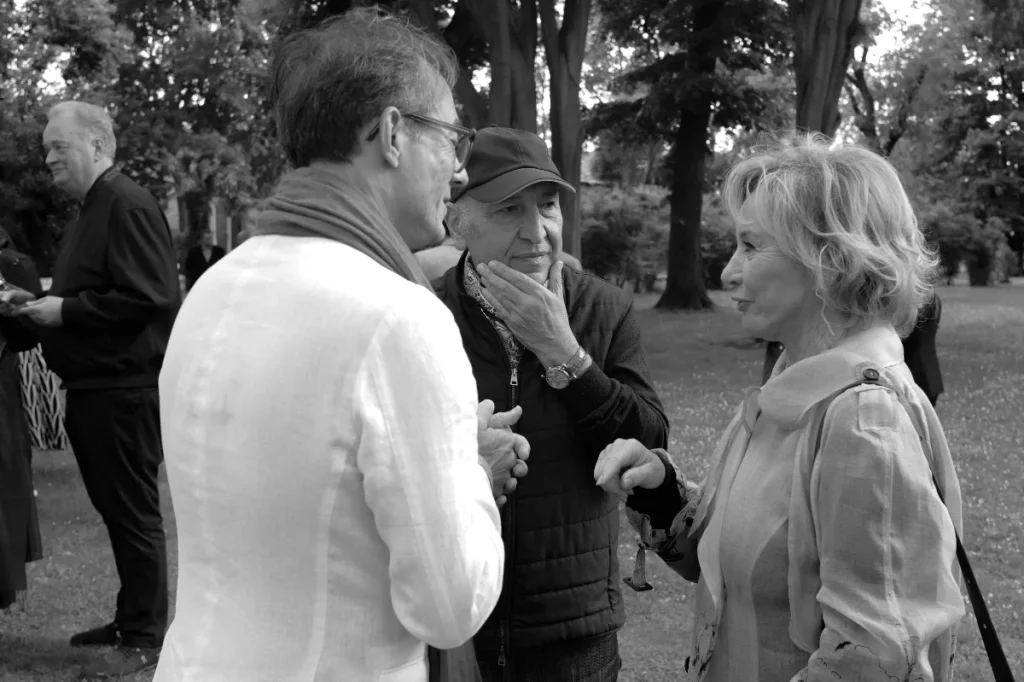
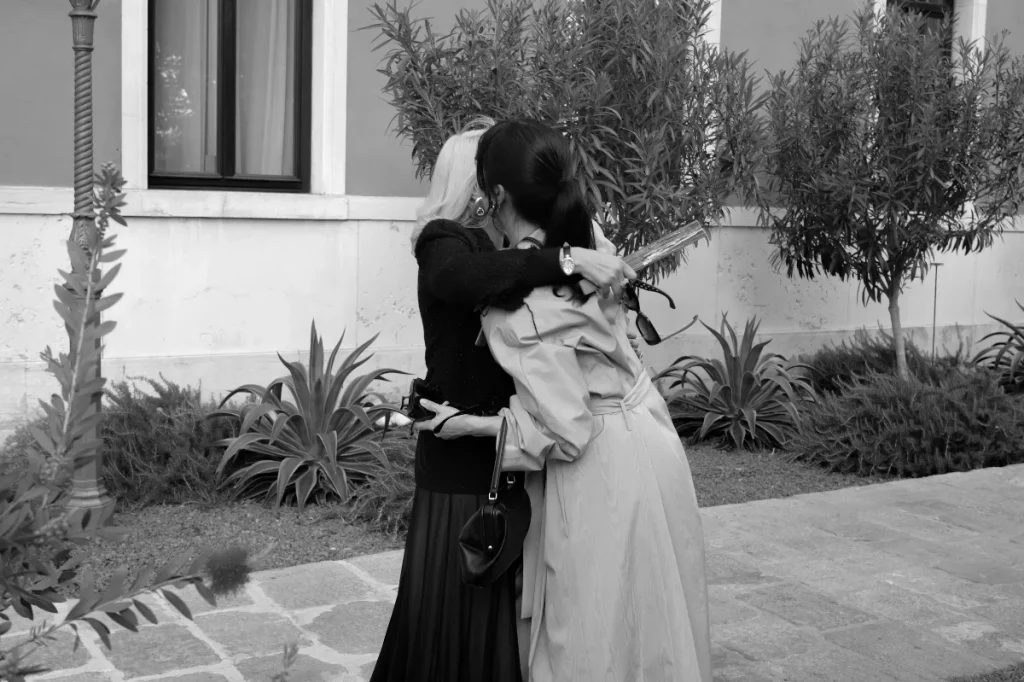
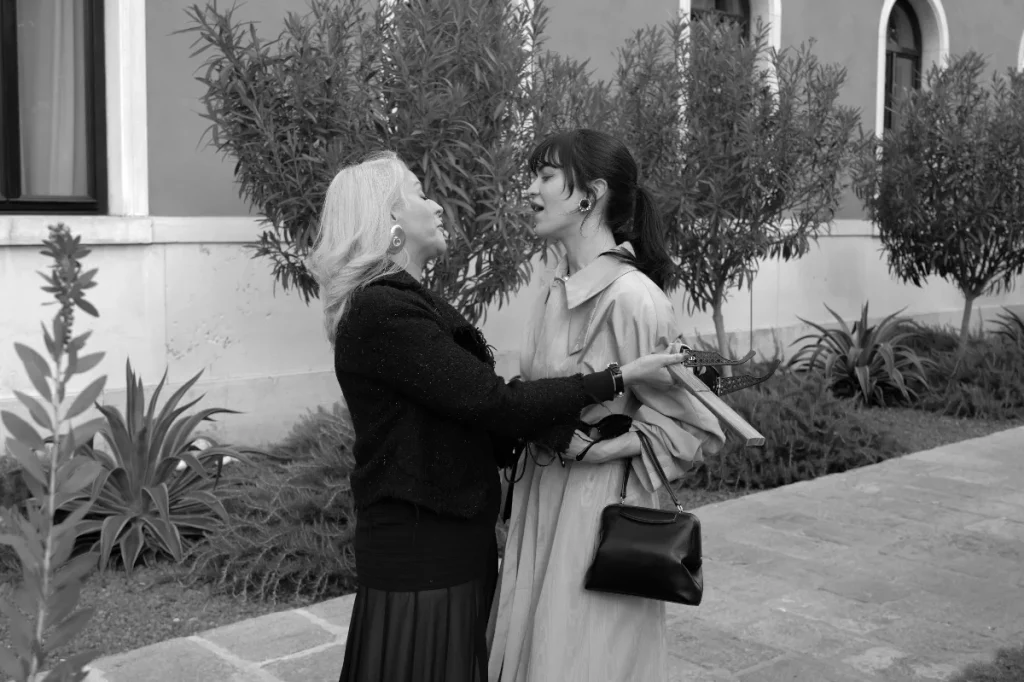
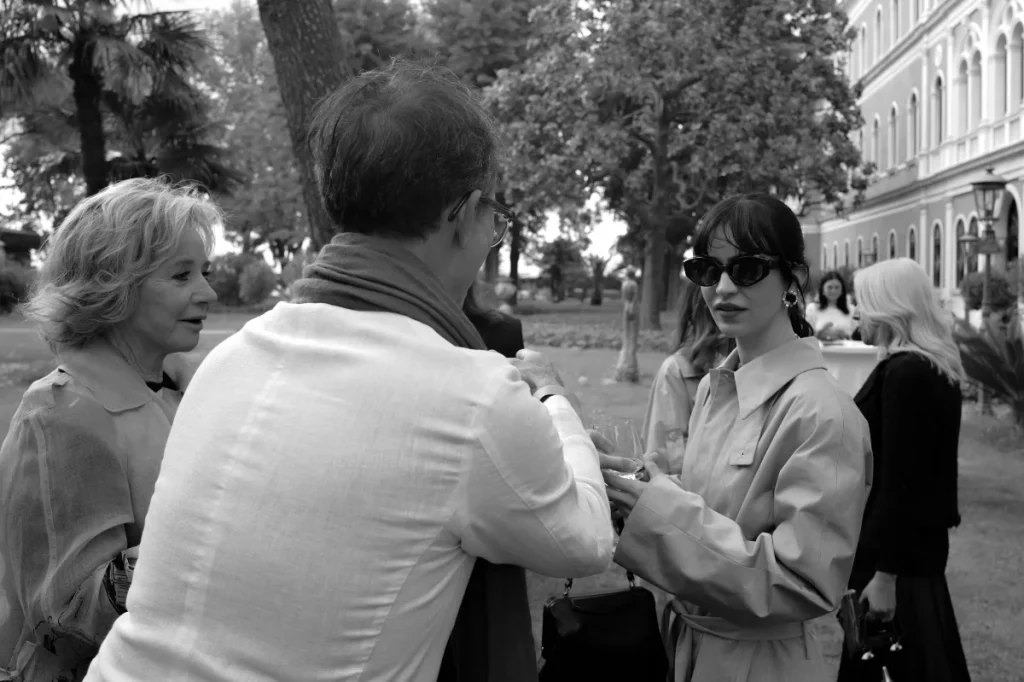
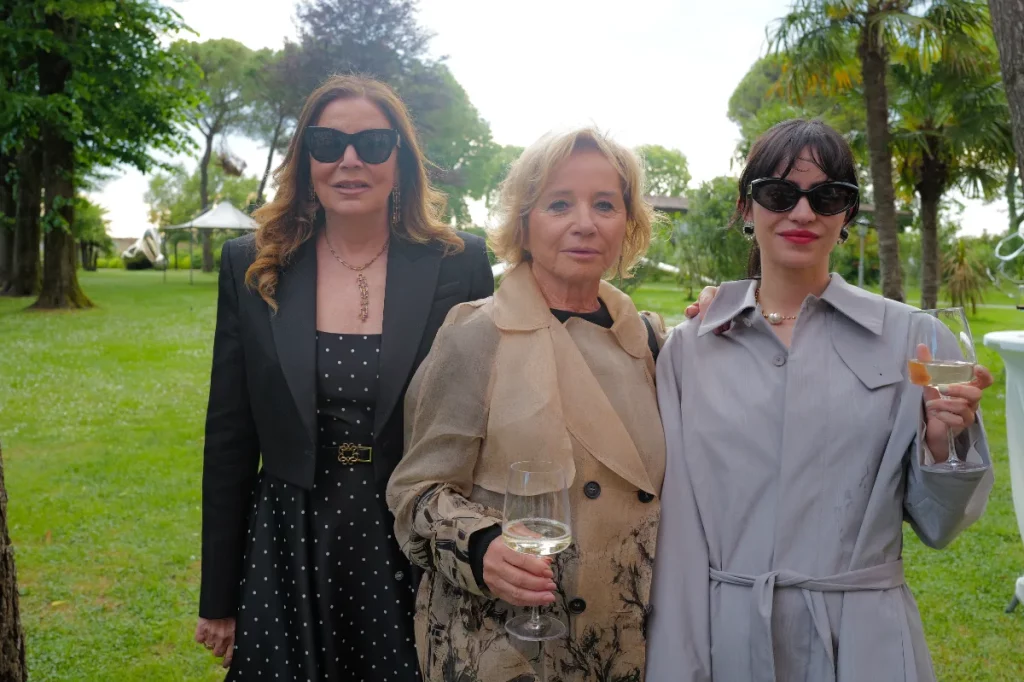
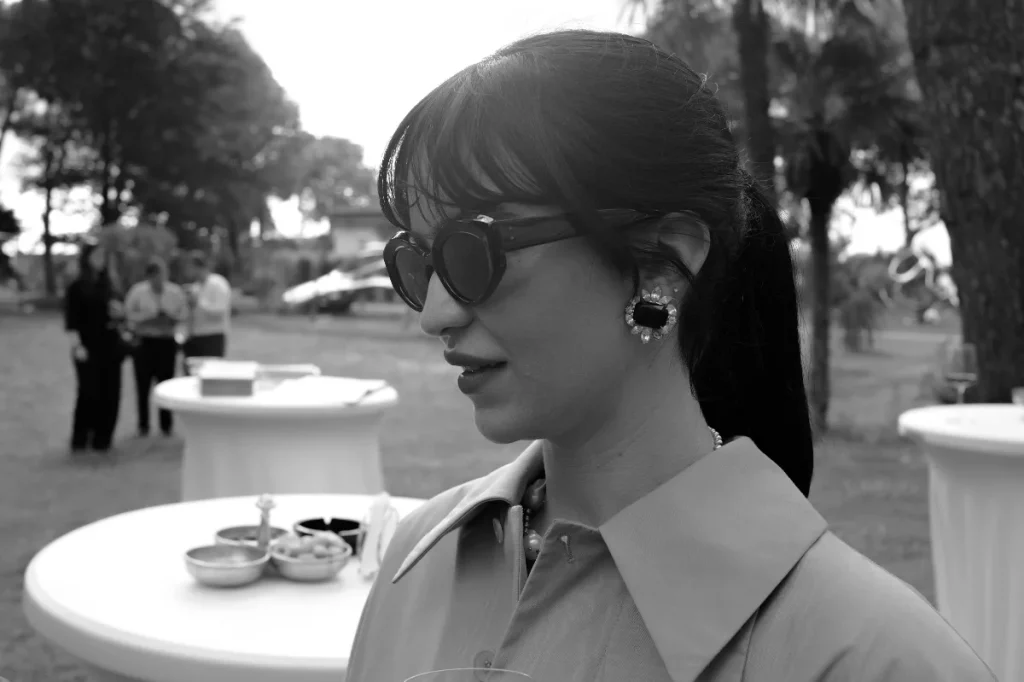

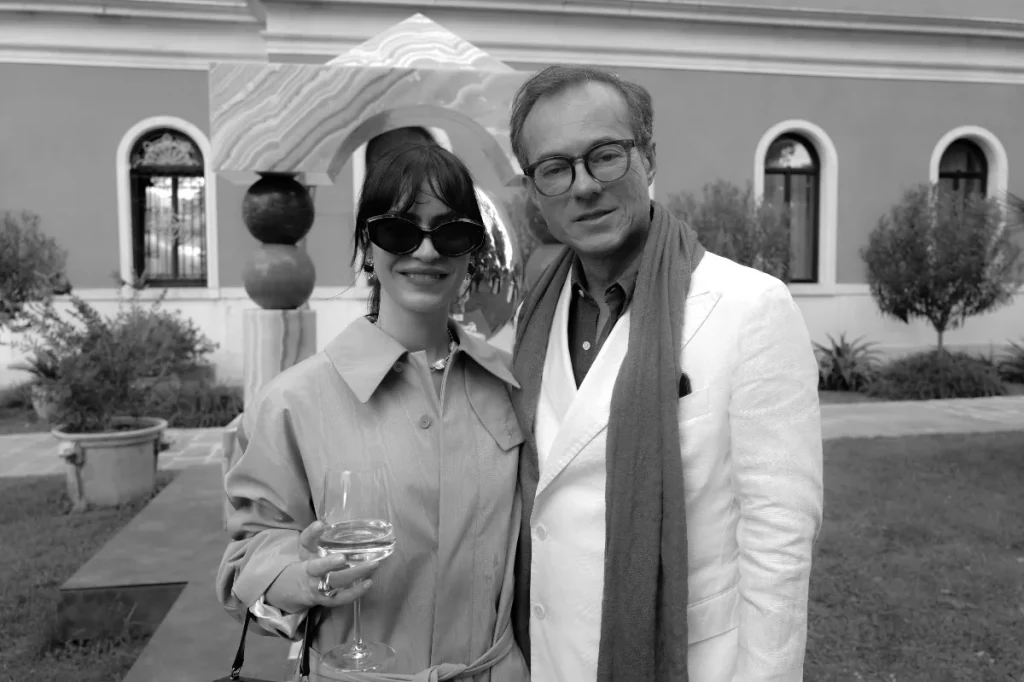
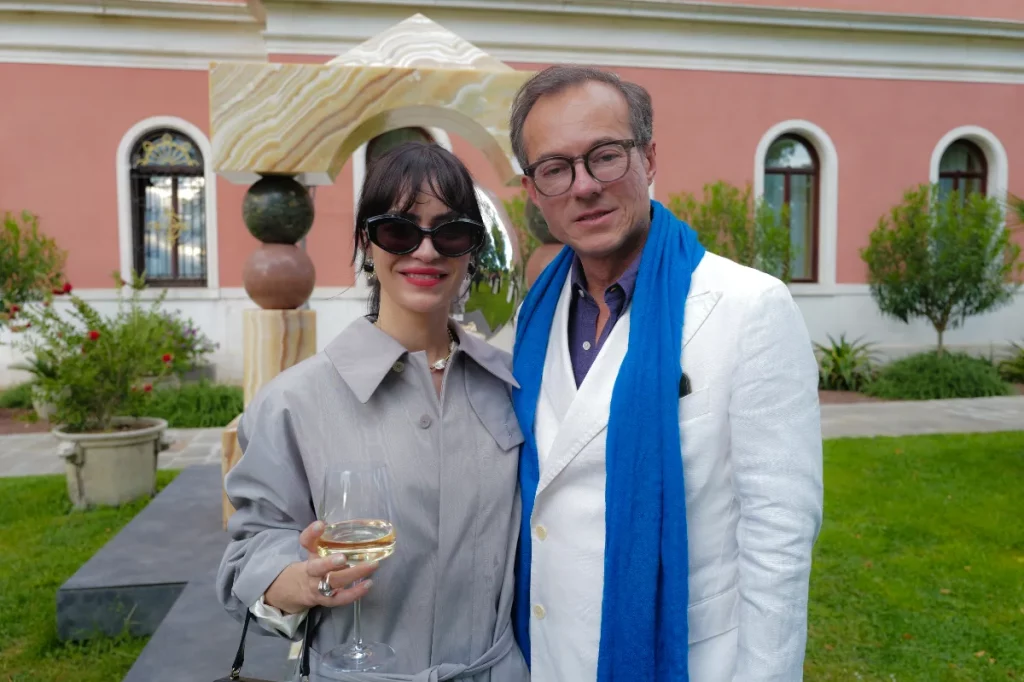
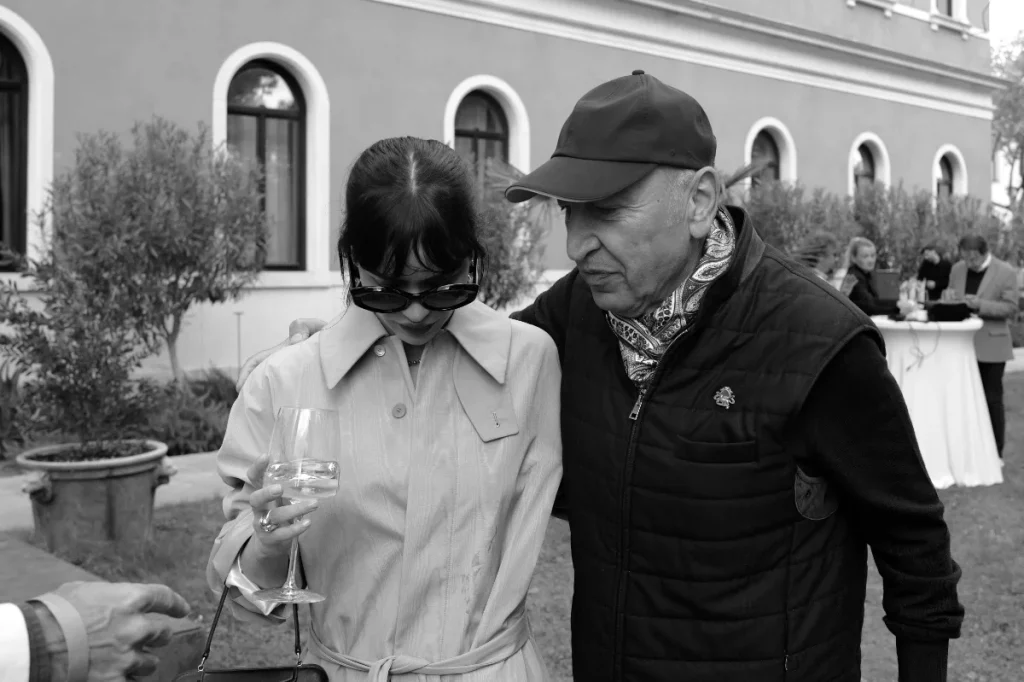

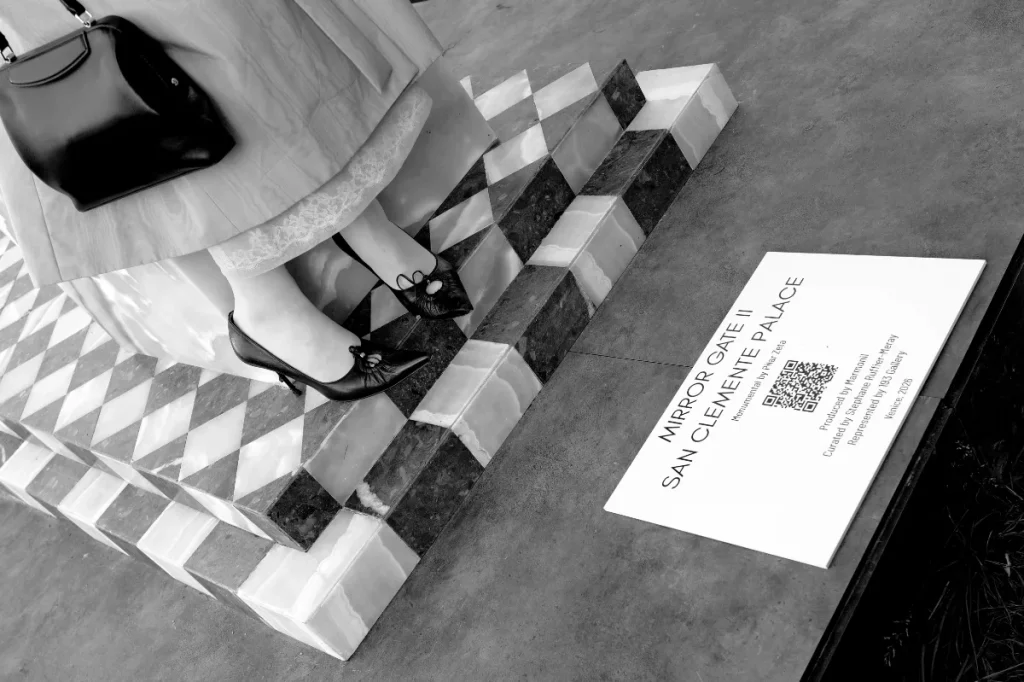
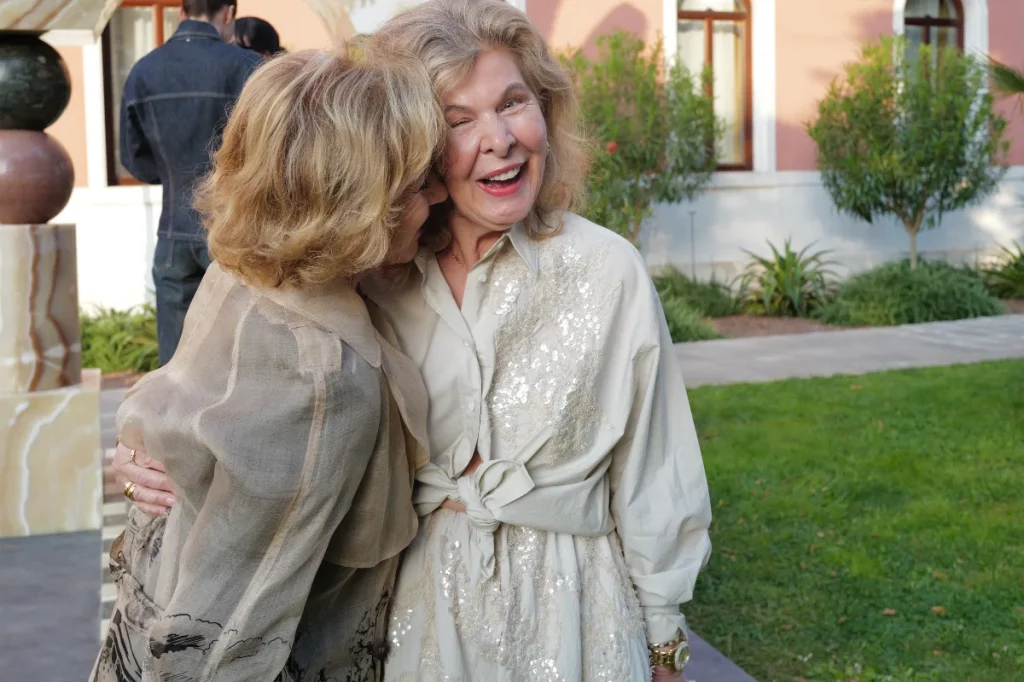
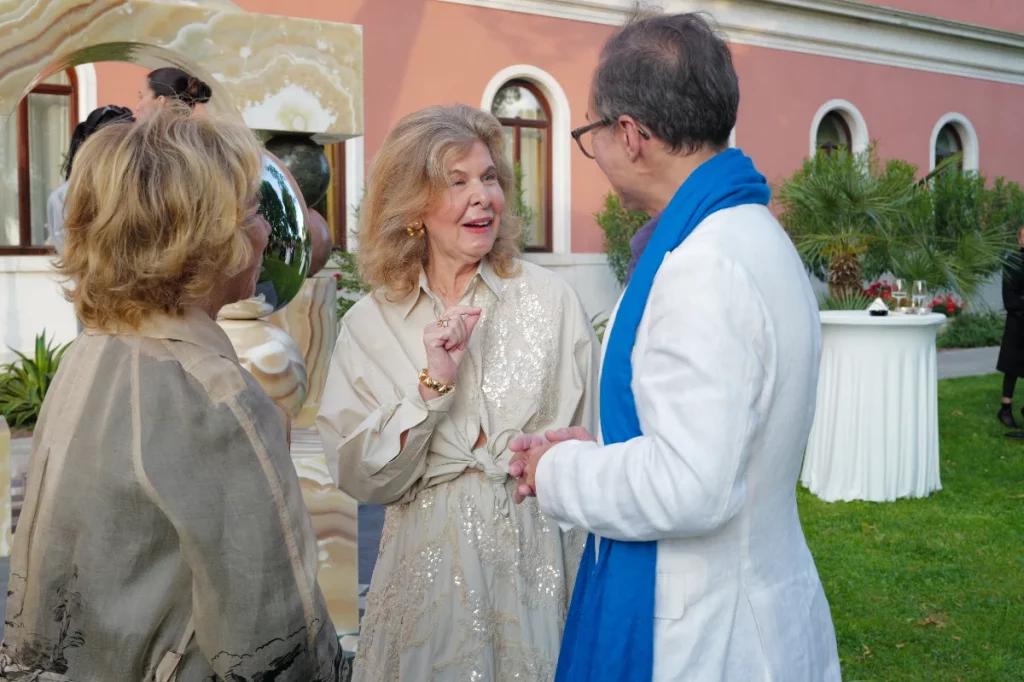
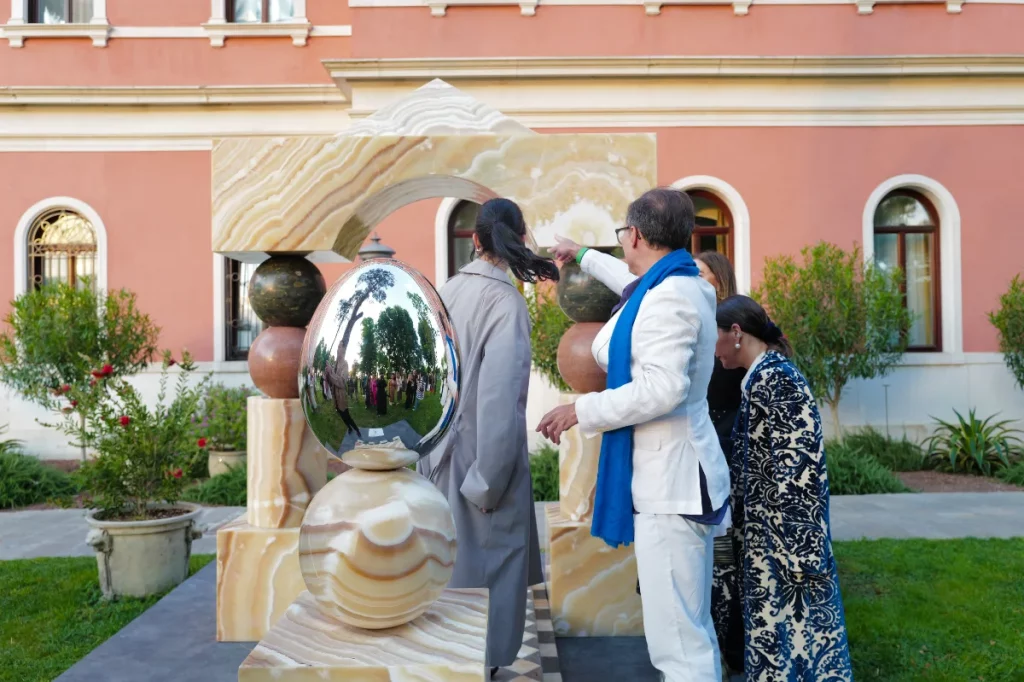
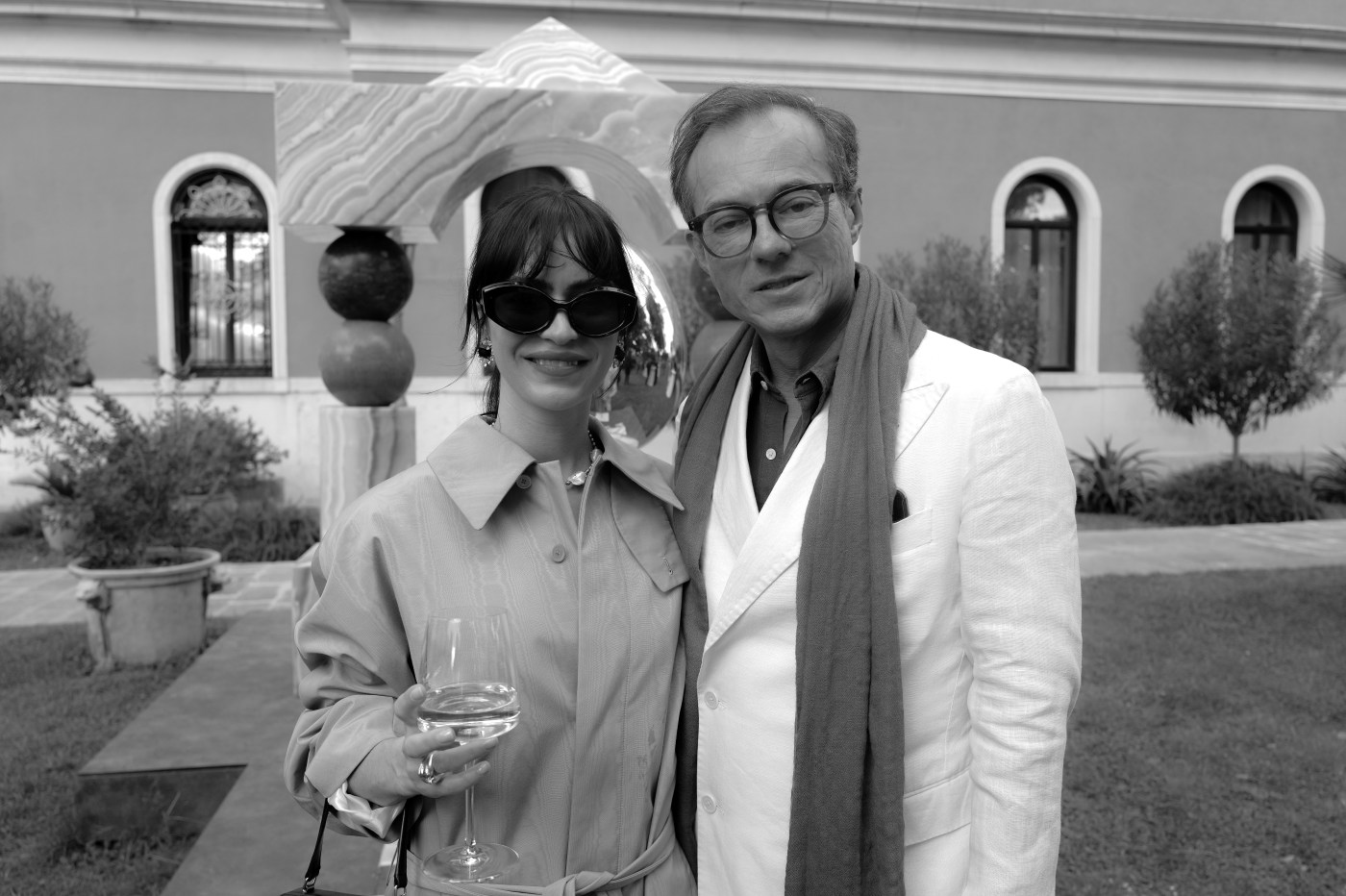
Animica Portraits met Pilar Zeta at San Clemente Palace during the photographic session of 8 May 2026. Her portrait has become part of the Volti Importanti section — the space that Animica dedicates to the personalities from the worlds of art, culture and fashion who pass through Venice and leave their mark.
📎 View the portrait of Pilar Zeta — Importants Face
The presence of Mirror Gate II in Venice is part of the broader context of Biennale Arte 2026 — the edition that every two years transforms the city into an international laboratory of contemporary art. While the Giardini and the Arsenale host the national pavilions, the gardens of San Clemente Palace offer a different kind of space: more intimate, more exclusive, where the dialogue between work and environment is complete.
It is the kind of presence that does not appear on tourist maps, but that those who seek art with care will find — and will not forget.
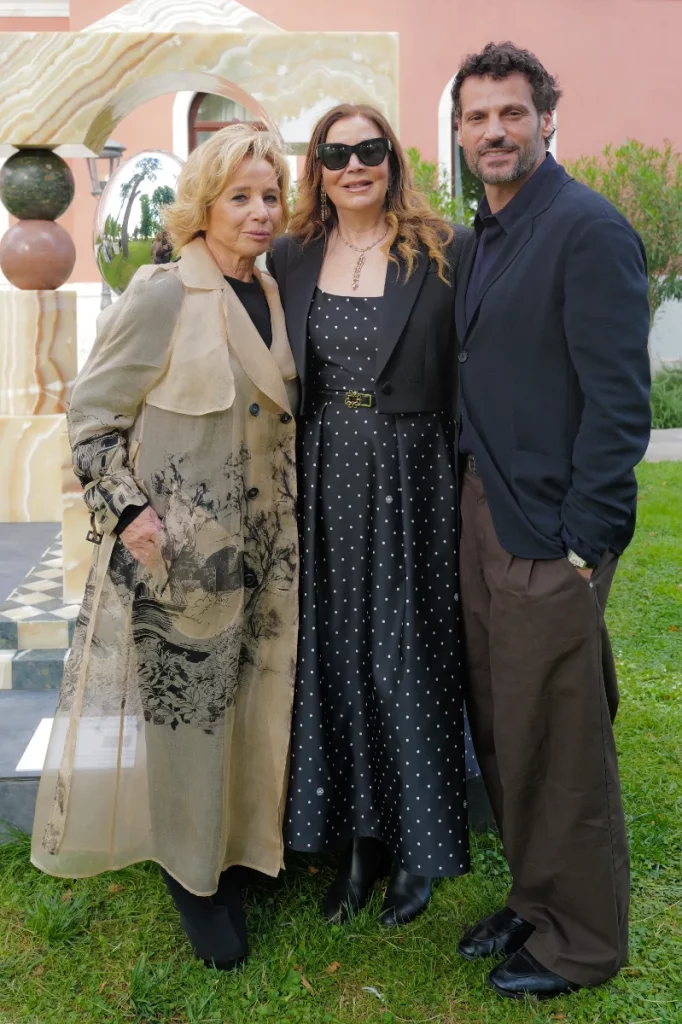
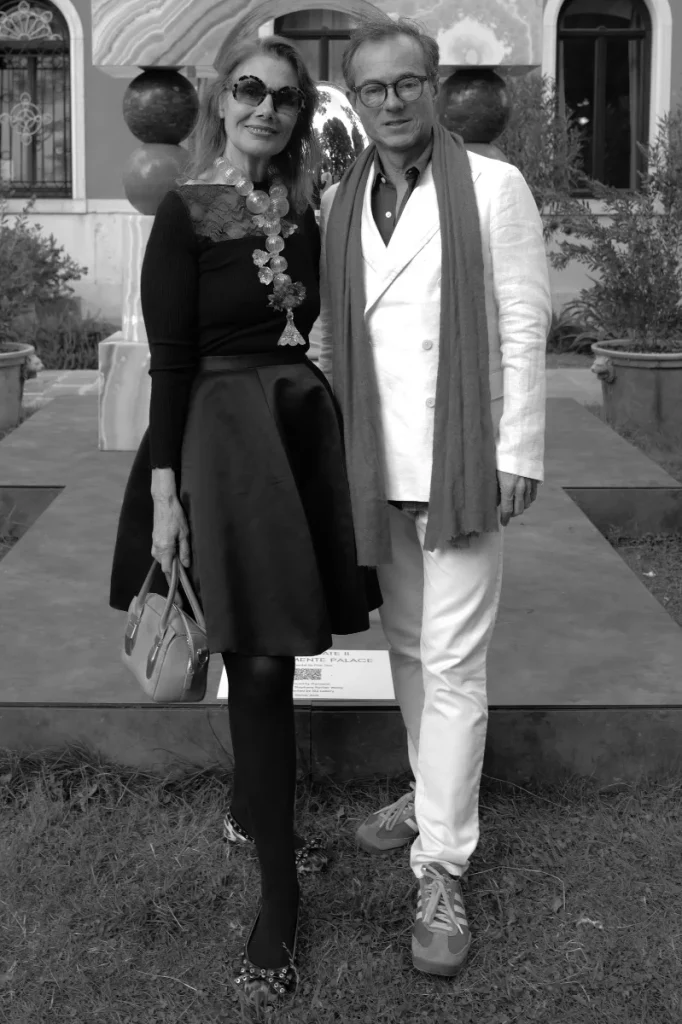
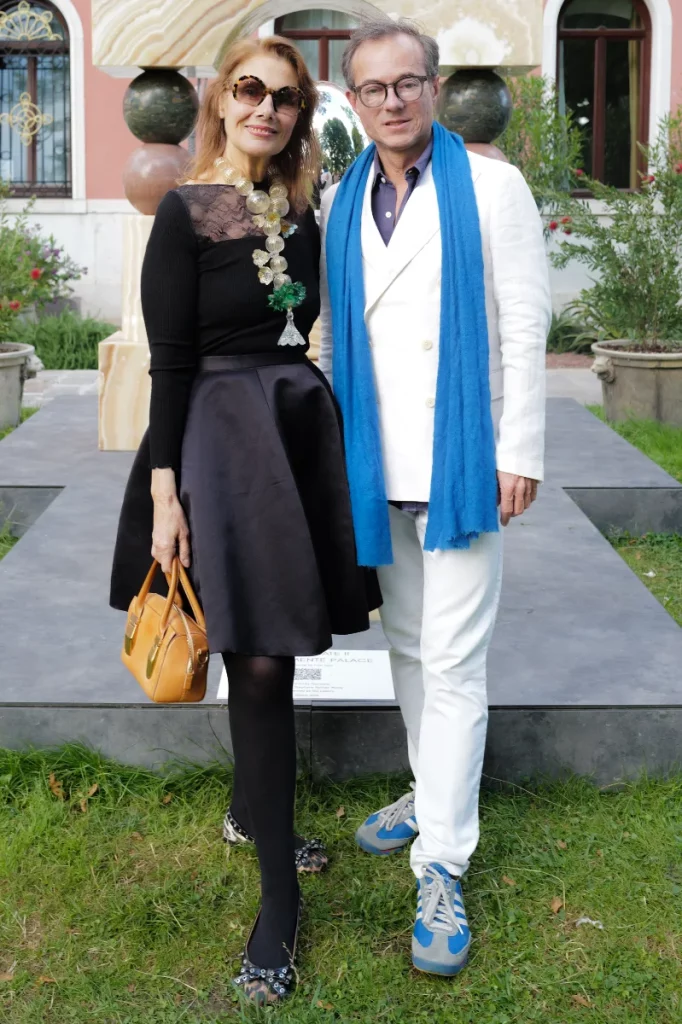
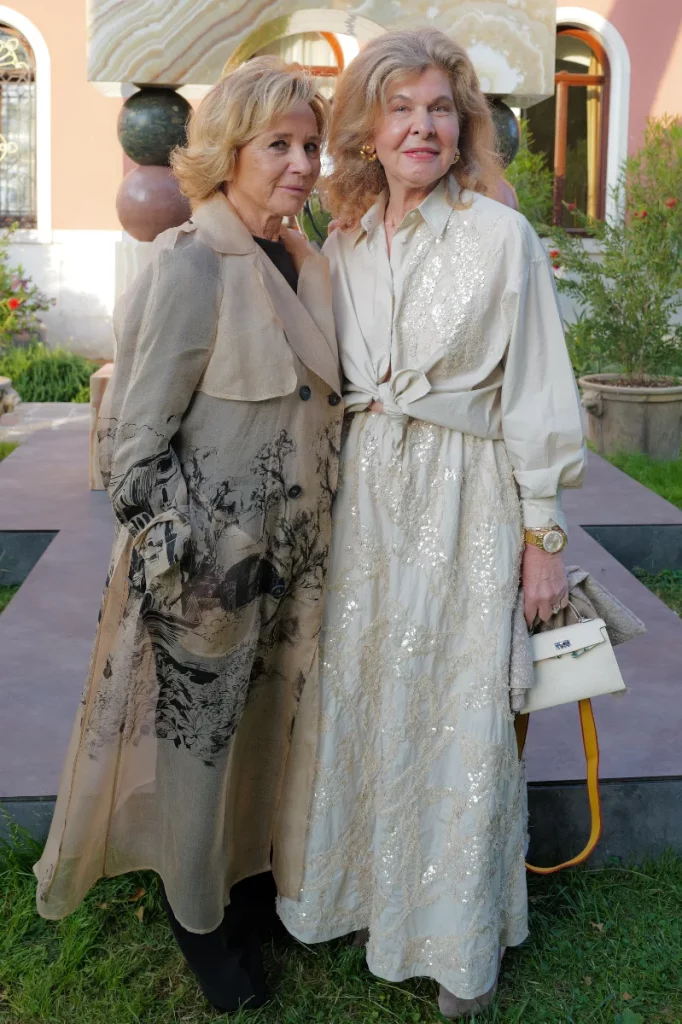
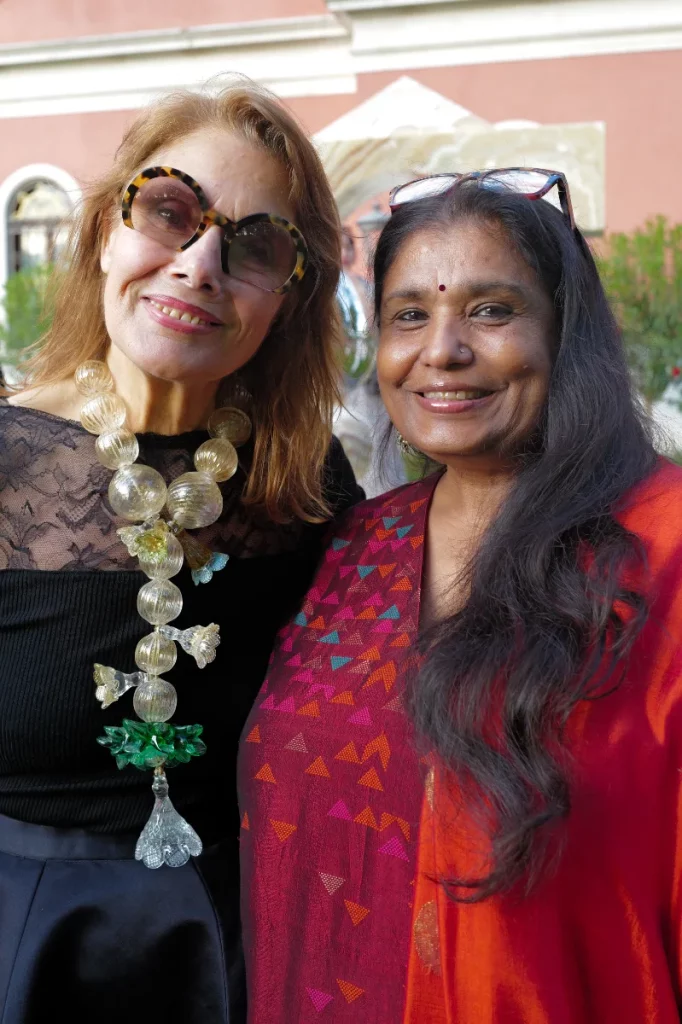
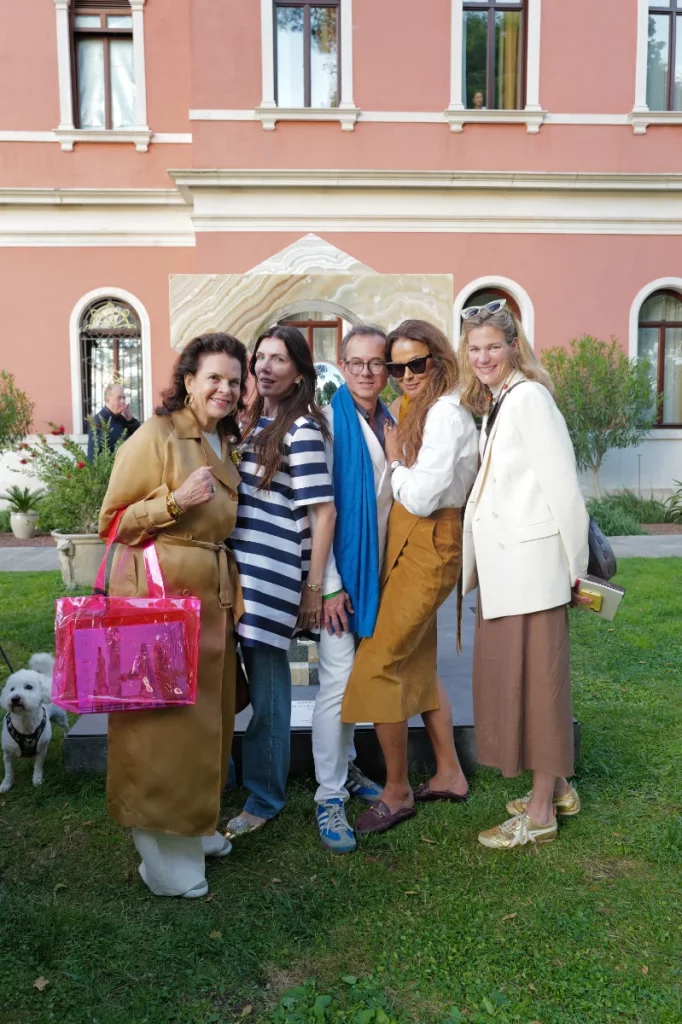
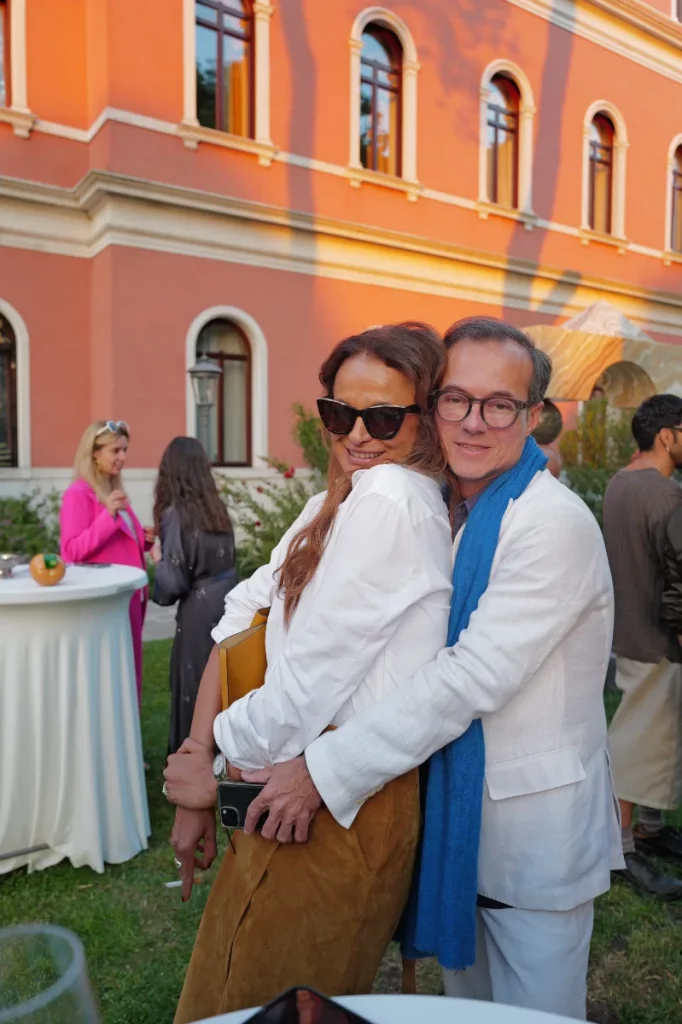
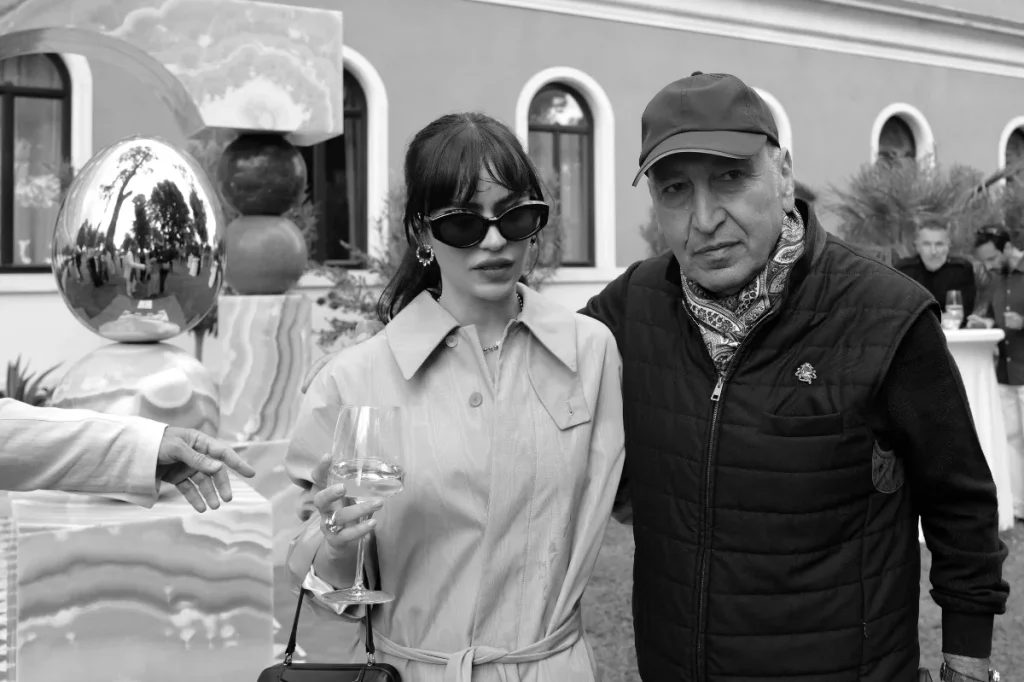
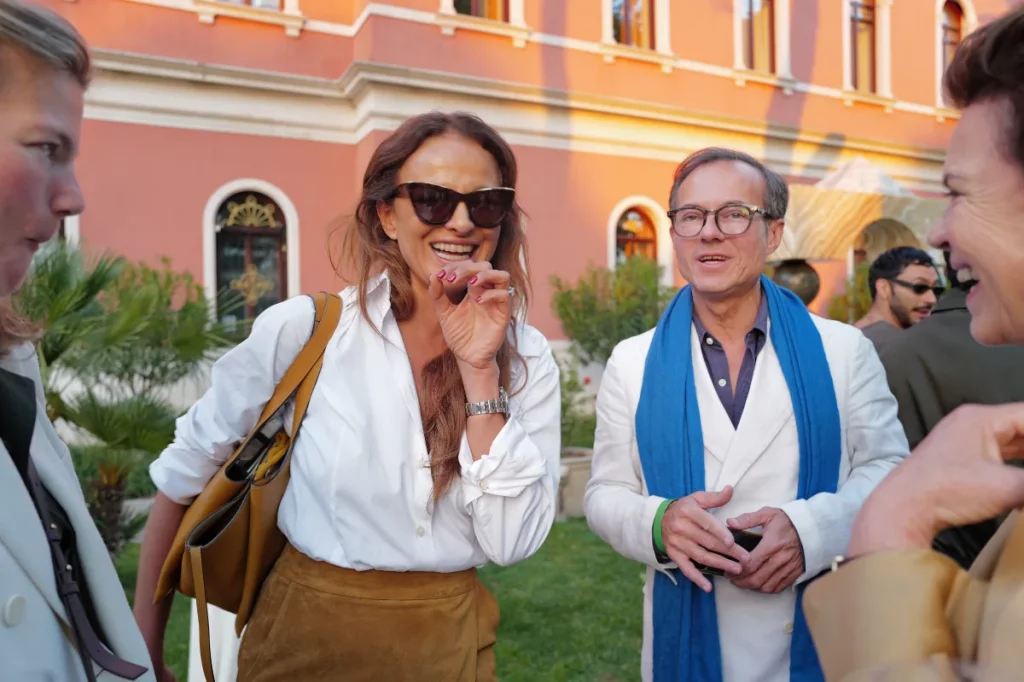
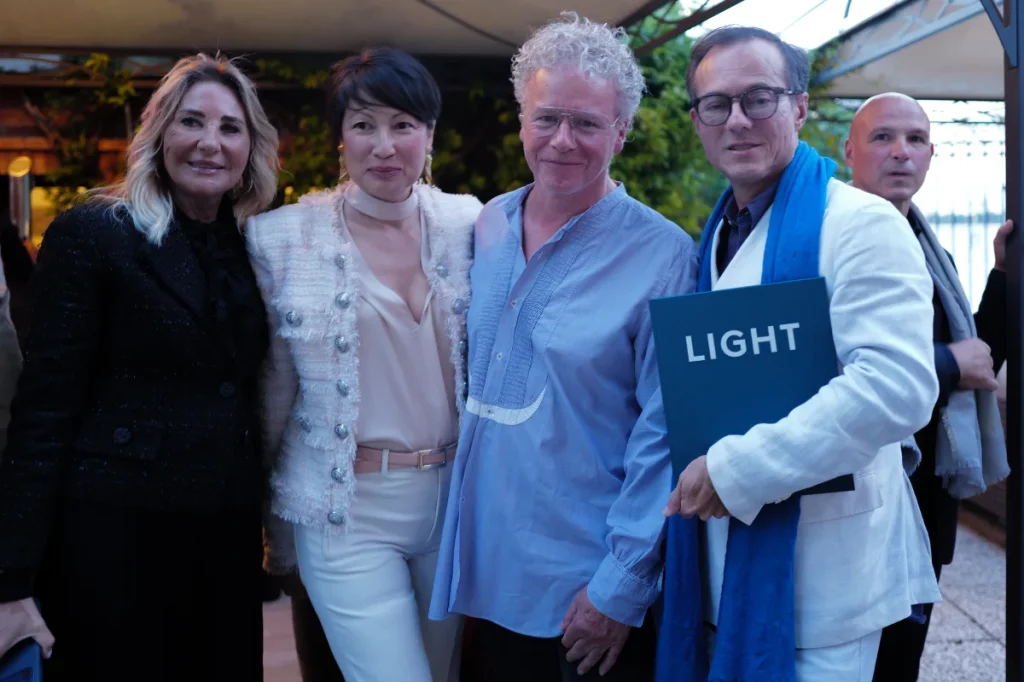
On 8 May 2026, the island of San Clemente was not merely the backdrop for an installation: it was the centre of a gathering of worlds. Around Mirror Gate II came together some of the most significant figures from the international art, business and fashion scenes — each with their own story, each with a deep bond with Venice and with beauty.
Playing host were Selim Uyar, owner of San Clemente Palace, and his wife Sevim — the guardians of this extraordinary space that has known how to transform itself, edition after edition, into one of the most fertile venues for contemporary art in the lagoon.
A presence of the highest distinction: Alberta Ferretti, the designer from Rimini who for decades has defined an Italian vision of romantic, artisanal elegance carried onto the world’s most prestigious runways. Her presence on the island is the hallmark of an elective affinity between the world of fashion and the art that builds portals.
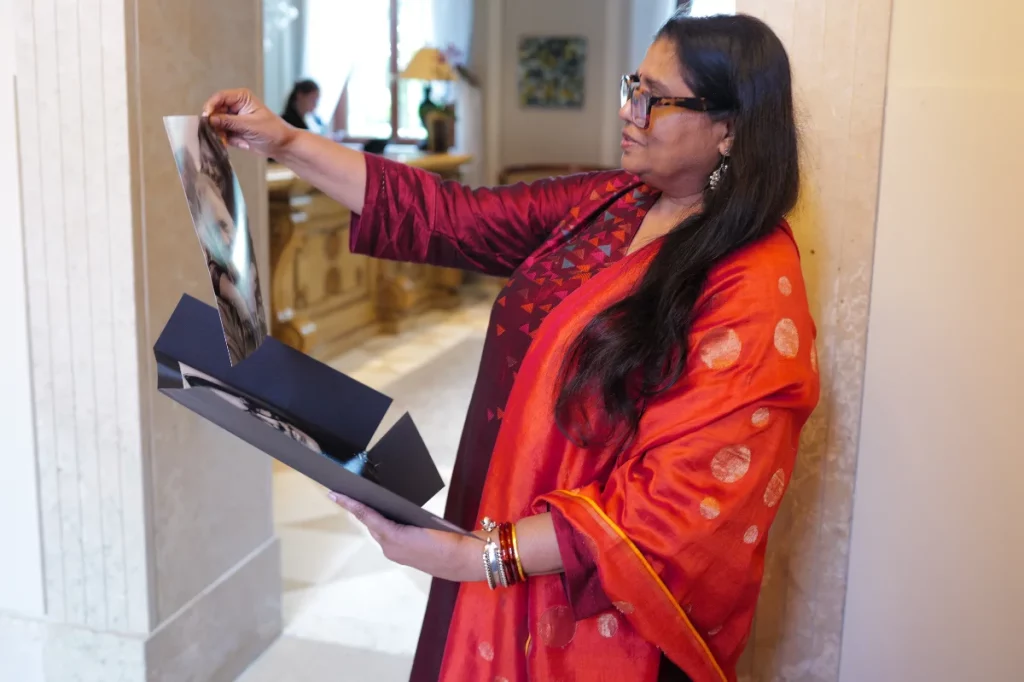
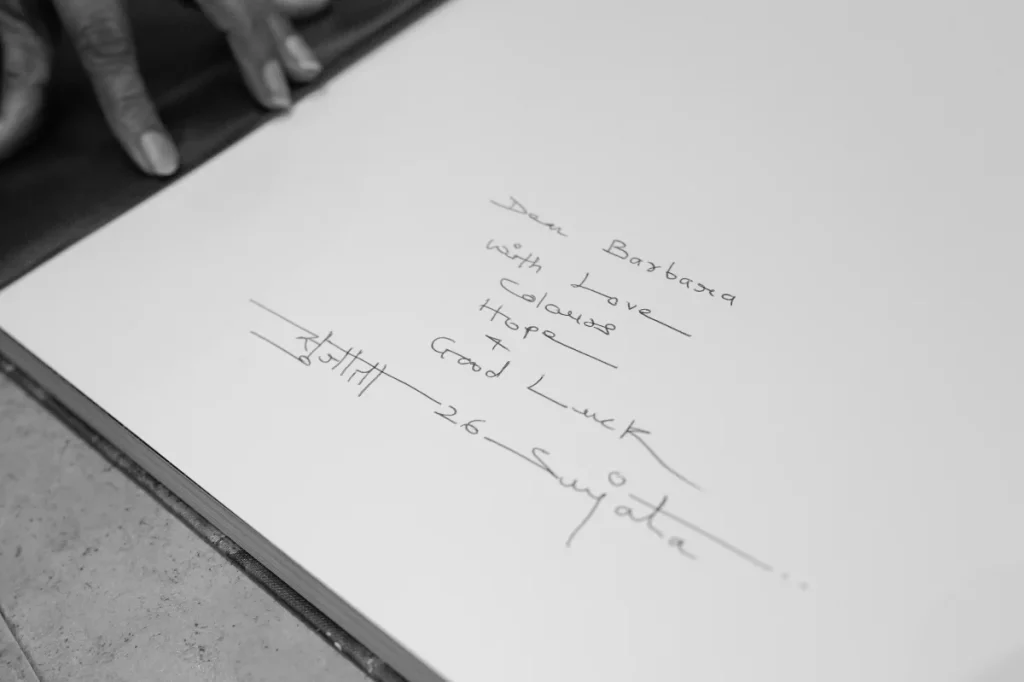
Among the international guests, Sujata Bajaj with her husband: an Indian painter with a Parisian formation — a graduate of the École des Beaux-Arts de Paris and present in the most important private collections across Europe and Asia — whose work fuses contemporary abstraction, spiritual geometries and the chromatic heritage of Rajasthan.
A multidisciplinary visual artist with Brazilian roots and a career built across the European capitals, Magda von Hanau brings with her a rare aesthetic sensibility: model, actress, and then painter and sculptor, her works — multiple-exposure photographs, glazed ceramic sculptures, installations — are held in international galleries and private collections and have appeared in Architectural Digest Italia, Elle Decor, and Casa Vogue Brasil.
On the side of Venetian artisan excellence, the presence of Tessitura Luigi Bevilacqua carries five centuries of history: the oldest weaving house in active production in Europe, still working on the original 18th-century looms of the Serenissima’s School of Silk, hand-producing soprarizzo velvets for the world’s greatest fashion houses and royal palaces.
Marmonil, the company that gave physical form to Pilar Zeta’s vision by extracting and crafting the Egyptian stones of Mirror Gate II, was naturally present as a protagonist of the work no less than the artist herself — the embodiment of a technical mastery that transforms ancient material into contemporary language.
Closing the circle: Sigrid de Montrond — countess, gallerist between Paris and Venice, creator of Atelier Visconti — and Stéphane Ruffier-Meray, curator of the project: the two who more than anyone else built the cultural and relational network that made this event possible.
The photographic documentation of the evening is signed by Barbara Pigazzi, international photographer and founder of Animica Portraits studio on the Giudecca, commissioned by Stéphane Ruffier-Meray to render in images the depth and beauty of this day on the island.
© Animica Portraits · Venice, 8 May 2026
Work: Mirror Gate II — Pilar Zeta
Sculptural production: Marmonil
Curated by: Stéphane Ruffier-Meray
Location: San Clemente Palace, Venice
Photography: Barbara Pigazzi · Animica Portraits Studio · commissioned by Stéphane Ruffier-Meray

You cannot copy content of this page